How to Clean a Fabric Sofa Without Damaging It?
Quick Answer: The Safest Way to Clean a Fabric Sofa
The safest and most effective way to clean a fabric sofa without causing damage is to check the manufacturer’s tag for the cleaning code, thoroughly vacuum away loose debris and pet hair, spot-test your cleaning solution on a hidden area, and gently blot stains rather than rubbing them. Following these steps prevents water rings, fabric shrinkage, and fiber wear.
Check the Upholstery Cleaning Code First
Before applying any water or cleaning solution to your couch, always locate the manufacturer’s tag (usually tucked under the seat cushions or attached to the frame). This tag contains vital cleaning codes that tell you what substances are safe to use:
W Code
- Safe for Water-Based Cleaners: This means you can use water, water-based detergents, or a steam cleaner safely without harming the fabric.
S Code
- Solvent-Based Cleaners Only: Water can damage or stain this fabric. You must use water-free solvent cleaners or dry-cleaning products.
WS Code
- Water or Solvent Safe: You can use either water-based cleaning solutions or dry-cleaning solvents. This is the most versatile fabric code.
X Code
- Vacuum Only: Do not use any liquids or solvents. This fabric must only be vacuumed or professionally dry-cleaned by an expert.
Tools and Products You Need
To get your fabric sofa looking fresh, gather the right supplies before you begin:
- Vacuum Cleaner with a soft brush attachment and a narrow crevice tool.
- Microfiber Cloths (white or light-colored to prevent dye transfer).
- Mild Dish Soap or Upholstery Shampoo (for “W” or “WS” fabrics).
- Dry Cleaning Solvent (for “S” code fabrics).
- Baking Soda (for neutralizing lingering odors).
- Soft-Bristled Brush for gently agitating upholstery fibers.
Step-by-Step Fabric Sofa Cleaning Method
Vacuum Crumbs, Dust, and Pet Hair
Remove all loose cushions and use your vacuum’s crevice tool to suck up crumbs, dust bunnies, and pet hair from deep within the cracks. Switch to the soft brush attachment to vacuum the surface of the cushions, armrests, and backrest.
Spot Test Before Applying Cleaner
Always test your chosen cleaning solution on a small, hidden patch of fabric (such as the back or underneath the base) to check for discoloration or bleeding. Wait 10 minutes to ensure the fabric dries safely.
Clean Stains Without Oversaturating Fabric
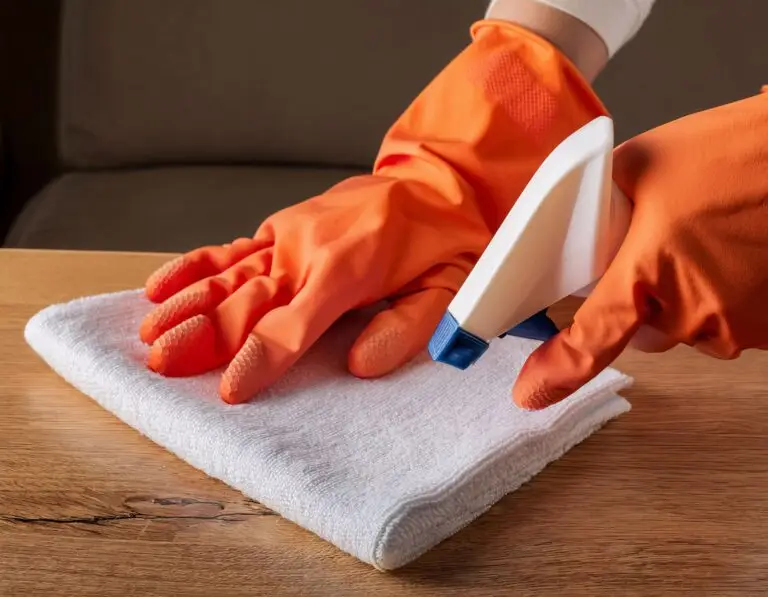
Mix a few drops of mild dish soap with warm water and whip it into a light foam. Dip a microfiber cloth into the foam (not the liquid water) and gently blot stains from the outside edges toward the center to prevent rings.
Dry the Sofa Properly
Press a dry, clean towel firmly against the cleaned areas to absorb excess moisture. Keep your room well-ventilated, or point a fan toward the sofa to accelerate drying. Avoid sitting on the couch until it is 100% dry.
Mistakes That Damage Fabric Upholstery
- Oversaturating the Fabric: Soaking cushions with too much water can seep into the inner foam padding, breeding mold and mildew.
- Scrubbing Too Hard: Vigorous rubbing frays fabric fibers and pushes stains deeper into the weave.
- Skipping the Spot Test: Using an unapproved cleaner can instantly bleach or ruin your upholstery.
- Using Colored Cloths: Dye from a cheap rag can transfer onto your light-colored sofa during cleaning.
When Professional Cleaning Is a Better Option
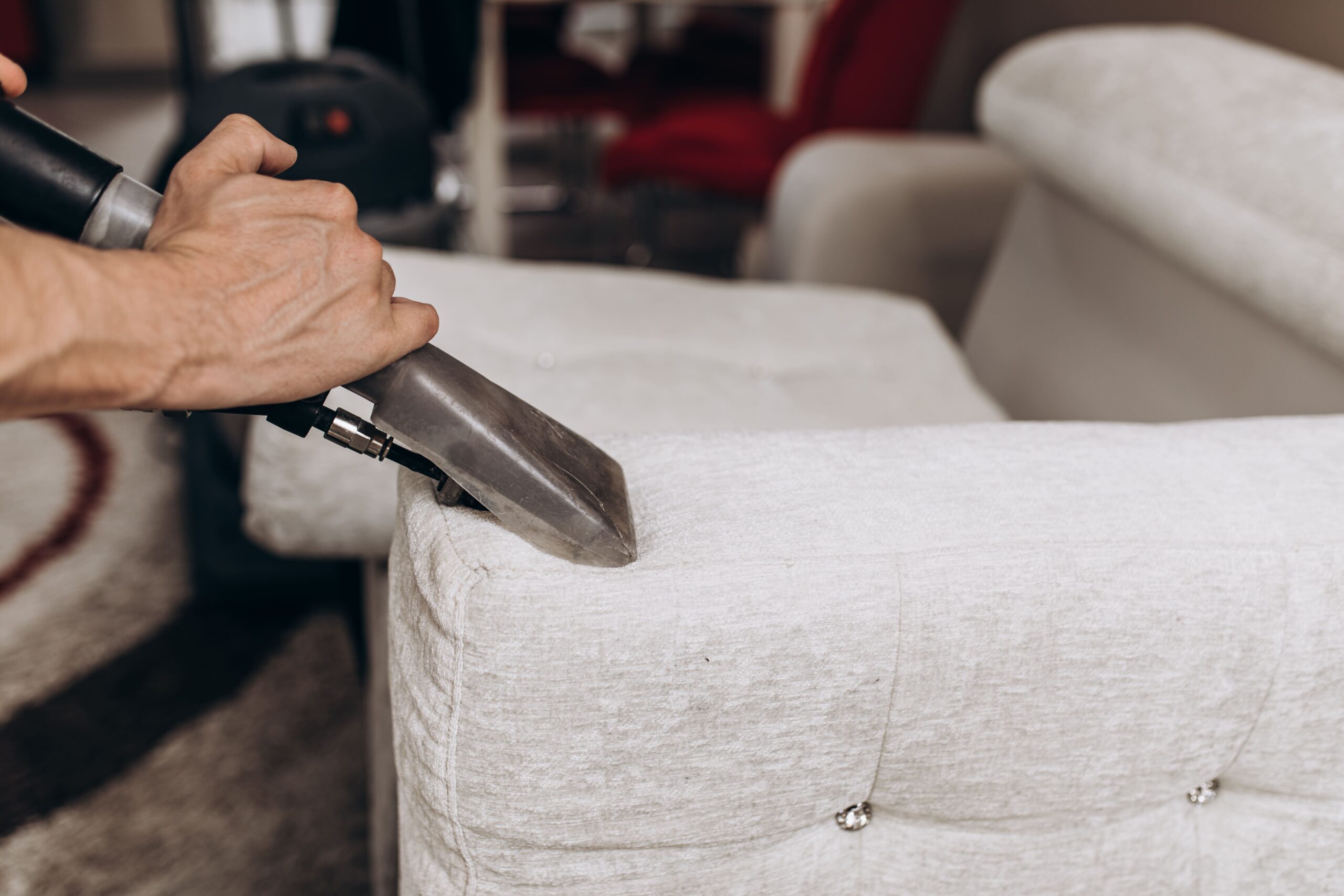
If your sofa has an “X” cleaning code, is upholstered in delicate vintage velvet or silk, or features stubborn set-in stains and deep-seated odors that DIY methods cannot lift, it is time to call in professionals. Expert cleaners have specialized extractors and fabric-safe solutions that restore your couch safely.
For complete home freshness that goes beyond your living room, check out our helpful guides on DIY Furniture Cleaning and How to Clean Wood Furniture. When you want to keep your entire living space immaculate year-round, our professional regular cleaning service takes care of your floors, surfaces, and upholstery effortlessly.
FAQ
Can I use vinegar on a fabric sofa?
Vinegar can be used safely on some “W” code synthetic fabrics to neutralize odors and lift light stains, but you should always dilute it with water and perform a spot test first, as its acidity can damage delicate natural fibers like silk or cotton.
How often should a fabric couch be cleaned?
You should vacuum your fabric couch weekly to remove abrasive dust and pet hair, and perform a deeper spot clean or professional refresh every 6 to 12 months depending on household traffic and pets.