DIY Furniture Cleaning: What Works and What to Avoid
Furniture is often the most significant investment in an American living room. However, because it is a “high-touch” surface, it quickly traps skin oils, food spills, and seasonal dust. While professional cleaning is the only way to reach deep into the padding, many homeowners can maintain their upholstery’s appearance with the right DIY techniques.
Quick Answer: DIY Furniture Cleaning Can Work if You Use the Right Method for the Fabric
The success of any DIY furniture cleaning depends entirely on the cleaning code found on the furniture tag. Using the wrong solvent—or too much water—can lead to permanent water rings, fabric shrinkage, or color bleeding. A “less is more” approach, focusing on vacuuming and targeted blotting, is the safest way to refresh your home’s interior.
Why fabric type matters
Cotton, linen, polyester, and microfiber all react differently to moisture. Some fabrics are “Dry Clean Only” (Code S), while others can handle water-based cleaners (Code W). Ignoring these codes can ruin a high-end sofa in minutes.
Why testing a small area first is essential
Before applying any cleaner, always perform a spot test on an inconspicuous area, such as the back of a cushion or the underside of the skirt. Wait for it to dry completely to ensure there is no discoloration or “ringing.”
What You Need for DIY Furniture Cleaning
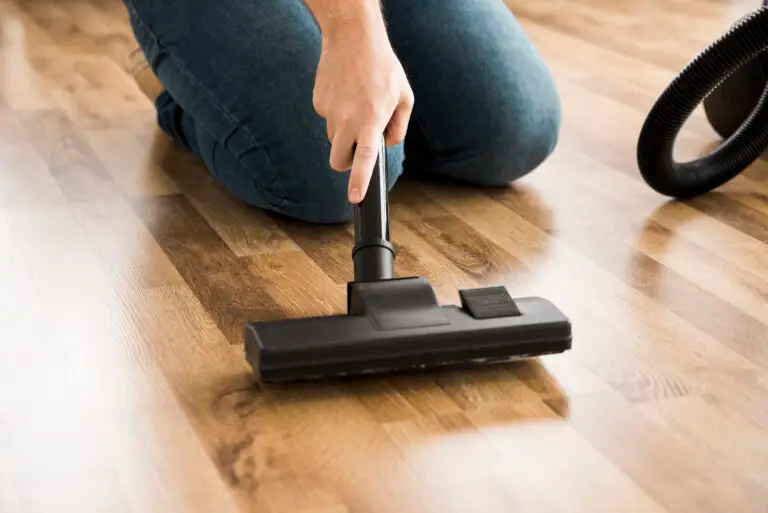
- Vacuum with Upholstery Attachment: The most important tool for removing the grit that grinds down fabric fibers.
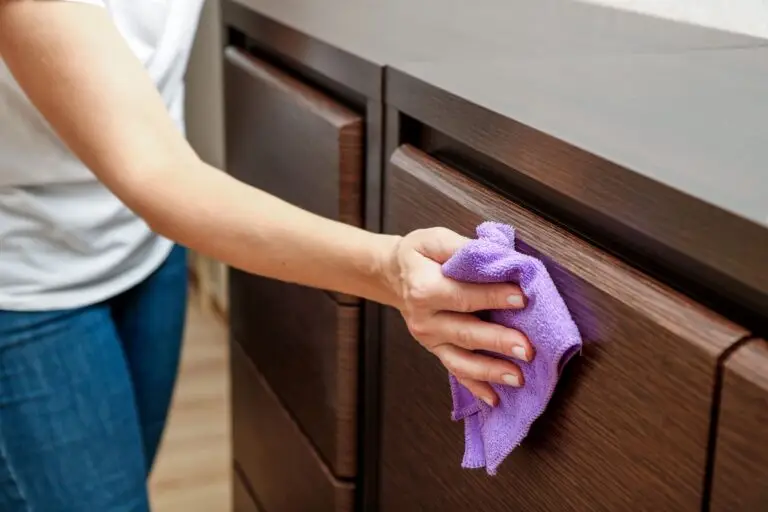
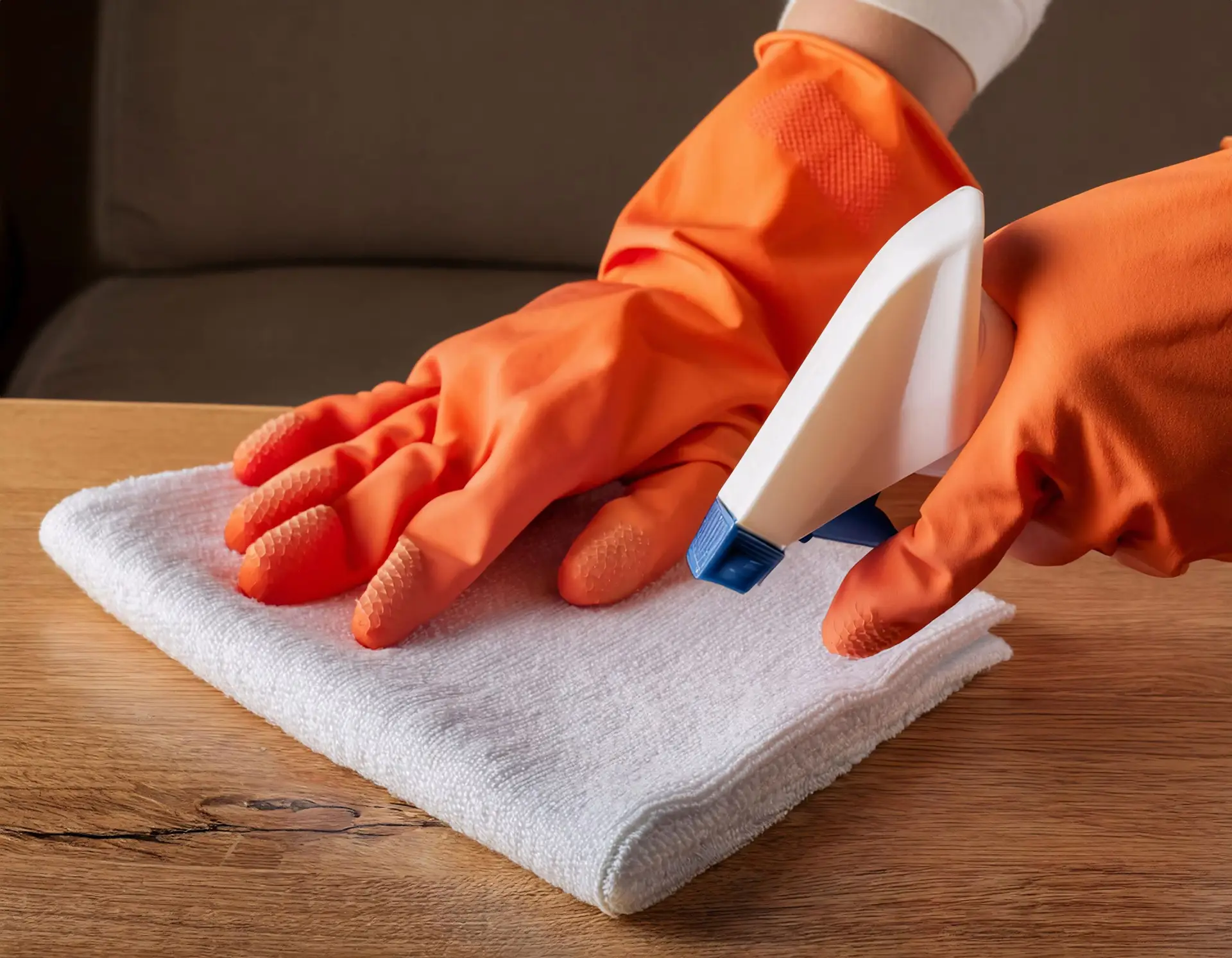
- Microfiber Cloths: These lift dirt without leaving lint behind.
- Mild Upholstery-Safe Cleaner: Clear dish soap and water, or a specialized pH-neutral foam.
- Soft Brush: A horsehair or soft nylon brush to agitate the fabric gently.
Step-by-Step: How to Clean Upholstered Furniture at Home
Step 1 – Vacuum Loose Dirt First
Use the crevice tool to get deep into the folds and under the cushions. Removing dry soil first prevents it from turning into “mud” once you apply a liquid cleaner.
Step 2 – Spot-Test Cleaner
Apply your chosen solution to a hidden spot. Check for color transfer on your white cloth and ensure the fabric doesn’t change texture when dry.
Step 3 – Blot Stains, Do Not Scrub
When treating a spill, use a clean cloth to blot from the outside of the stain toward the center. Scrubbing pushes the liquid deeper into the padding and can fray the fabric fibers.
Step 4 – Let the Fabric Dry Fully
Use a fan to speed up the drying process. Do not sit on the furniture until it is bone-dry to avoid “setting” new wrinkles or trapping moisture in the foam.
DIY Furniture Cleaning by Material
Fabric Sofas
Most modern American sofas are Code W or WS. A mixture of 1 teaspoon of dish soap in a bowl of warm water works well. Use only the “suds” (foam) to clean the surface to avoid over-saturating the padding.
Microfiber Furniture
Microfiber is notorious for water-spotting. Use rubbing alcohol in a spray bottle instead of water. Mist the area, scrub gently with a white sponge, and once dry, use a soft brush to “fluff” the fibers back to their original texture.
Leather Furniture
Leather requires moisture balance. Use a damp cloth with a specialized leather soap (Lexol or similar). Avoid all-purpose sprays or vinegar, which can dry out the hide and cause cracking.
Wood-Framed Upholstered Chairs
Be careful not to get upholstery cleaner on the wood finish, as it can cause “blushing” (white spots). Wipe the wood with a separate dry cloth immediately if any spray lands on it.
What DIY Furniture Cleaning Can and Cannot Fix
Dust, Odor, and Light Stains
A good vacuuming and a sprinkle of baking soda (left for 20 minutes and vacuumed up) can remove 90% of surface odors and light dust.
Deep-Set Stains and Heavy Buildup
DIY methods cannot reach the “bio-burden” inside the cushions. If your furniture has been through a flood, has heavy pet urine saturation, or hasn’t been cleaned in over 3 years, you need professional steam extraction.
Common Furniture Cleaning Mistakes
- Over-Wetting Fabric: This leads to mold growth in the foam and “browning” of the fabric.
- Using the Wrong Cleaner: Never use bleach or harsh floor cleaners on upholstery.
- Scrubbing Stains Too Aggressively: This “bursts” the fibers, making the area look fuzzy and permanently worn out.
FAQ: Do It Yourself Furniture Cleaning
Can I clean upholstery myself?
Yes, for maintenance and fresh spills. However, for a “like-new” restoration, professional equipment is required.
What is the best homemade furniture cleaner?
For most fabrics, a simple mix of distilled water and a few drops of clear dish soap is the safest and most effective option.
How do you clean a couch without damaging it?
Always follow the tag (W, S, WS, or X), use minimal moisture, and never skip the vacuuming step.
When should I hire professional upholstery cleaning?
If the stains are widespread, the odors are deep-seated, or the fabric is a delicate material like silk or genuine velvet.
Need Help With Detailed Home Cleaning?
At JAMA Cleaning, we know that a clean home includes more than just the floors and counters. While you handle the daily maintenance of your furniture, our professional deep-cleaning services ensure that the rest of your home is sanitized and dust-free, providing a healthy environment for your family and your upholstery.
- Detailed Dusting: We remove the allergens that settle on your furniture.
- Comprehensive Care: We clean around, under, and behind your heavy pieces.
- Professional Standards: We treat every part of your home with the same level of expertise.
Would you like JAMA Cleaning to provide a free estimate for a deep home cleaning that includes a professional dusting of all living areas?