Best Way to Clean Kitchen Cabinet Doors
Kitchen cabinets are the workhorses of your kitchen, but they are constantly under siege from cooking oils, steam, and splashes. Over time, these particles settle on the surfaces, turning into a sticky, dust-attracting layer that can dull the look of even the most expensive kitchen.
At Jama Cleaning Services, we emphasize that cabinet cleaning is all about controlled moisture. Whether you have high-end painted cabinetry or natural wood, the goal is to remove the “gunk” without compromising the protective finish of the wood or the bond of the paint.
Why Kitchen Cabinets Get Sticky and Greasy
Kitchen grease is a combination of vaporized cooking oils, steam, and dust. When you sauté or fry food, microscopic droplets of oil become airborne and land on your cabinets. As they cool, they harden and turn into a sticky adhesive that pulls in dust and dirt, creating that tell-tale “tacky” feeling. The longer this sits, the harder it becomes to remove without damaging the finish beneath.
Best Cleaners for Cabinet Doors
- Dish Soap and Warm Water: This is the gold standard. Dish soap is chemically engineered to break down grease, making it the safest and most effective tool for almost all cabinet types.
- Degreasing Spray: For heavy buildup near the stove, a gentle, water-based degreaser can be used, but always test it on an inconspicuous spot first.
- Vinegar Solution: A diluted mixture (1:2 parts water to vinegar) can cut through grease, but use with extreme caution—it should not be used on natural wood finishes long-term.
- Wood-Safe Cabinet Cleaner: For high-end, stained wood, commercial cleaners like Murphy Oil Soap (in mild dilution) or specialized wood cleaners are designed to nourish the finish rather than strip it.
How to Clean Painted Cabinet Doors
Painted cabinets are sensitive to moisture and abrasion.
- Prep: Mix a small amount of mild dish soap into warm water.
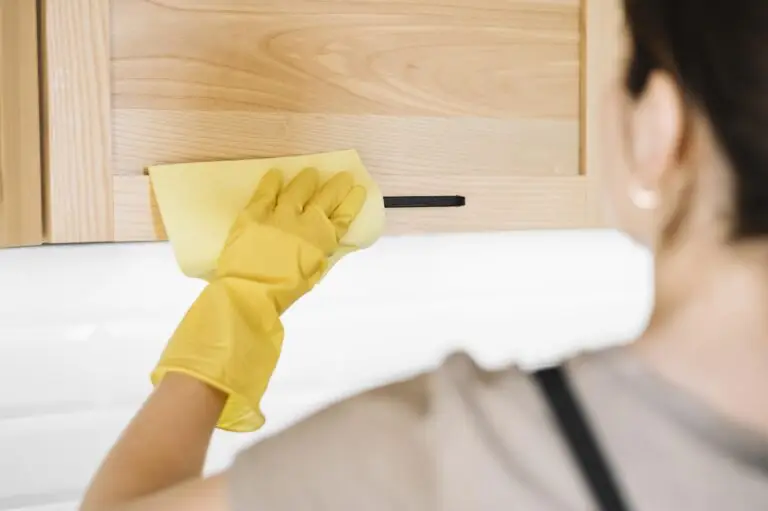
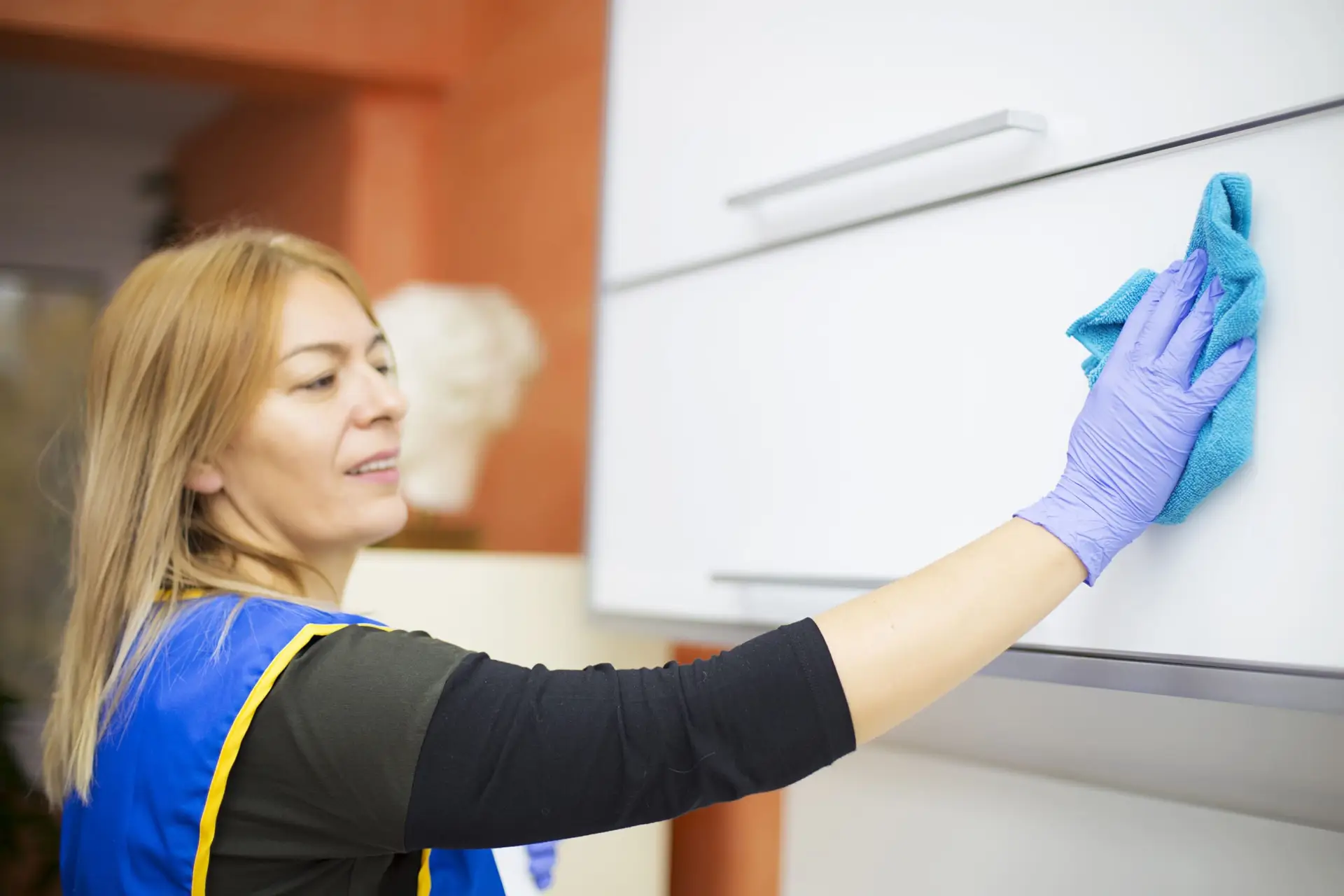
- Wipe: Dip a soft microfiber cloth into the solution and wring it out until it is barely damp.
- Clean: Gently wipe the surface. Focus on the corners and the hardware, as these catch the most residue.
- Dry: Immediately follow up with a fresh, dry microfiber cloth. Never let water sit on painted edges, as it can seep into joints and cause paint to peel or bubble.
How to Clean Wood Cabinet Doors
Natural wood requires a bit more care to preserve its luster.
- Dust: Remove surface dust first with a dry cloth.
- Clean: Use a very small amount of a pH-neutral wood cleaner or a mild dish soap solution. Ensure your cloth is only damp.
- Grain Direction: Always wipe in the direction of the wood grain to avoid leaving streaks or forcing dirt into the fibers.
- Buff: Use a clean, dry cloth to buff the wood to a soft shine.
How to Remove Grease Without Damaging the Finish
If you encounter a “stubborn” spot of grease, do not reach for a scrub brush.
- The “Wait” Method: Apply a slightly stronger soap-to-water mixture to a cloth, hold it against the greasy spot for 30 seconds to let the soap dissolve the oil, and then wipe gently.
- The “Soft Touch”: If it doesn’t come off, repeat the process. Pushing harder only risks polishing away the finish or creating a “dull spot” where the paint/stain has been rubbed off.
Cabinet Cleaning Mistakes to Avoid
- Over-Saturating: Too much water is the #1 enemy. It ruins particleboard cores and causes finish failure.
- Magic Erasers: Avoid these entirely. They are essentially fine-grit sandpaper. They will strip the paint or topcoat off your cabinets, leaving you with permanent dull patches.
- Ammonia/Bleach: These harsh chemicals can strip paint and discolor natural wood stains.
- Leaving Residue: Always rinse or wipe away soap suds. Leftover soap attracts more dirt, making your cabinets feel sticky within days.
How Often Should Kitchen Cabinets Be Cleaned?
- High-Traffic Zones: The cabinets near your stove and sink should get a quick, light wipe-down once a week.
- Full Deep Clean: Aim for a comprehensive wipe-down of all cabinet fronts every 3 to 6 months to prevent long-term buildup.
FAQ
What is the best cleaner for kitchen cabinets?
For 90% of cabinets, warm water mixed with a few drops of mild dish soap is the best, safest, and most effective cleaner.
How do you remove sticky grease from cabinets?
Let the soap do the work. Apply a warm, soapy cloth to the spot and hold it there for 30 seconds to soften the grease before wiping gently. Do not scrub hard.
Can vinegar damage wood cabinets?
Yes. While it cuts grease, vinegar is acidic. Frequent use can break down the finish, making the wood look dull and eventually leaving it unprotected. Use it only in high dilution and sparingly.
Can you use Magic Eraser on cabinets?
No. Never use a Magic Eraser on kitchen cabinets. It is a highly abrasive product that will remove the sheen and damage the paint or wood finish permanently.
How do professionals clean kitchen cabinets?
Professionals use low-moisture techniques, high-quality microfiber, and specialized, non-abrasive degreasers that remove residue without stripping the finish. At Jama Cleaning Services, we focus on restoring the finish’s integrity while ensuring no moisture damage occurs.
Does your kitchen deserve a professional refresh? Greasy cabinets can make a clean kitchen feel unkempt. Let our team handle the deep-cleaning process for you, safely and efficiently.
Contact Jama Cleaning Services today to get a quote and bring back the shine!