How to Clean Wood Furniture?
Fine wood furniture is an investment that can last for generations if cared for properly. Unlike synthetic materials, wood is an organic substance that reacts to its environment, meaning the cleaning methods used must respect the delicate balance of the finish and the wood’s natural moisture content.
Quick Answer: Gentle Cleaning Preserves Wood Finishes
The golden rule for wood furniture is “less is more.” The goal is to remove surface contaminants without penetrating the finish or altering the wood’s moisture level. Most modern furniture has a protective topcoat (like lacquer, polyurethane, or shellac) that acts as a shield; your cleaning efforts should focus on maintaining this shield rather than soaking the wood underneath.
Why water and harsh chemicals damage wood
Wood is hygroscopic, meaning it absorbs and releases moisture. Excessive water can seep through micro-cracks in the finish, causing the wood fibers to swell, warp, or “check.” Furthermore, harsh chemicals—especially those containing ammonia or high concentrations of alcohol—can chemically soften or “melt” the finish, leading to permanent cloudiness or a sticky surface that actually attracts more dust.
Daily and Weekly Wood Furniture Cleaning
Regular maintenance is the best way to prevent the buildup of grime that eventually requires more aggressive (and potentially damaging) cleaning.
Dry dusting with microfiber
Dust is more than just an aesthetic nuisance; it is abrasive. Under a microscope, household dust contains tiny particles of silica and fibers that can act like sandpaper.
- The Technique: Use a clean, high-quality microfiber cloth. Microfiber is engineered to “grab” and lift dust rather than pushing it around. Avoid using feathered dusters, which can scratch the surface with broken quills and often just move dust into the air.
Mild soap and damp cloth method
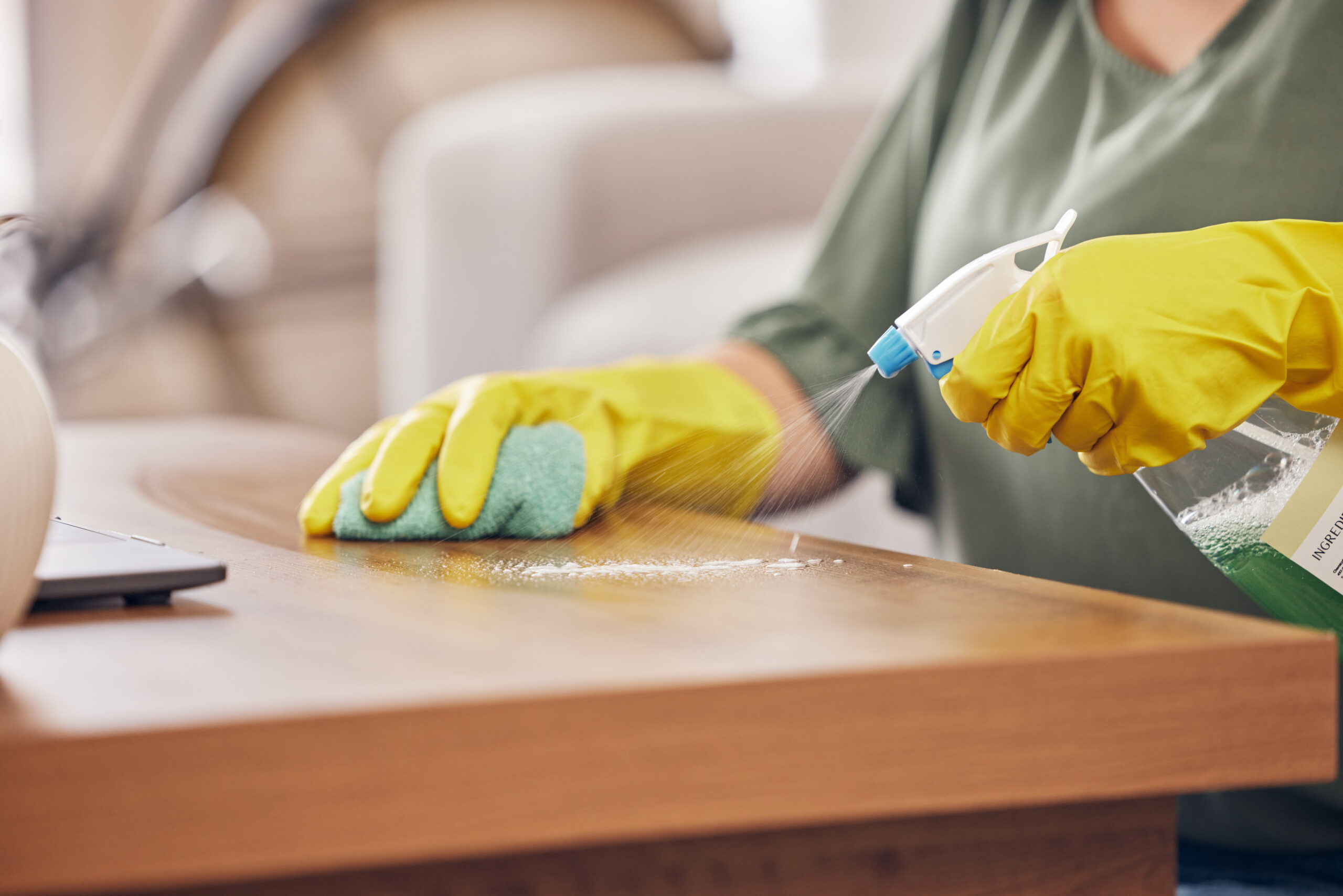
For weekly cleaning or to remove light “film” from the surface, a very slightly damp cloth is the safest choice.
- The Solution: Mix a drop or two of mild dish soap into a bowl of warm water.
- The Application: Dip a soft cloth into the solution and wring it out until it is barely damp—it should feel nearly dry to the touch.
- The Wipe: Wipe the furniture in the direction of the wood grain.
- The Dry: Immediately follow up with a fresh, dry cloth to remove any trace of moisture. Never let wood “air dry.”
Removing Stains and Sticky Residue
Sometimes, daily dusting isn’t enough to handle the realities of a busy home, such as kitchen grease or accidental spills.
Grease and fingerprints
Fingerprints contain oils and acids that can eventually etch into a finish. For greasy spots, the mild soap method mentioned above is usually sufficient. For more stubborn buildup, a cloth dampened with a 1:1 mixture of water and surgical spirit (rubbing alcohol) can be used only if you test it on an inconspicuous area first to ensure it doesn’t dull the finish.
Water rings and marks
Water rings occur when moisture is trapped under the surface of the finish (white rings) or has penetrated the wood itself (black rings).
- White Rings: These are in the finish. Often, applying a bit of oily substance like mayonnaise or petroleum jelly and letting it sit overnight can draw the moisture out. Alternatively, a hair dryer on a low, warm setting moved constantly over the spot can sometimes evaporate the trapped moisture.
- Black Rings: These indicate the wood is damaged. These usually require professional refinishing.
Polishing and Protecting Wood Furniture
There is a common misconception that wood needs to be “fed” with oils. In reality, once wood is finished, the “food” never reaches the wood.
When to use polish or wax
- Furniture Polish: Best for a quick shine and to help the cloth glide during dusting. Look for products containing silicone only if you don’t plan on ever refinishing the piece (silicone makes future refinishing difficult).
- Paste Wax: This is the professional’s choice for long-term protection. It provides a hard, thin shell that protects against moisture and minor scratches. It only needs to be applied once or twice a year.
How often furniture should be polished
Over-polishing leads to “smearing” and a gummy buildup. You should only polish your furniture every few months. If the surface looks dull after dusting, a quick polish is fine, but if you can see your fingerprints in the “depth” of the polish, you are using too much.
FAQs
Is vinegar safe for wood furniture?
Generally, no. Vinegar is acetic acid. While it is a great cleaner for glass or tile, the acid can eat through the finish of your wood furniture over time, leaving it dull and unprotected.
Can I use furniture polish every time?
It is not recommended. Using polish every time you dust leads to a thick, waxy buildup that eventually traps dust and makes the furniture look dark and cloudy. Stick to dry microfiber for 90% of your dusting.
How do professionals clean wood furniture?
Professionals focus on “conservation.” They typically use mineral spirits to remove old wax and grime without damaging the underlying finish, followed by a high-quality Carnauba-based paste wax to provide a durable, beautiful glow.
Does your heirloom furniture look tired, cloudy, or scratched? Don’t risk damaging your precious pieces with hardware-store “fixes.” Our professional wood restoration team understands the science of finishes and the art of woodcare. From deep cleaning and wax removal to specialized scratch repair and polishing, we bring the luster back to your home. Contact us today for a professional consultation and let us preserve your history for the next generation!