How to Clean Shower Heads and Remove Mineral Buildup?
A weak, uneven spray from your shower head isn’t just annoying—it is a sign that your fixture is struggling under the weight of mineral deposits. In many parts of the U.S., “hard water” is the primary culprit, leaving behind white, crusty deposits of calcium and lime that restrict water flow and harbor bacteria.
At Jama Cleaning Services, we view a high-performing shower as an essential part of a healthy home. Here is our expert-led approach to restoring your shower head to full power without damaging your finishes.
Why Shower Heads Get Clogged
When water evaporates, it leaves behind dissolved minerals like calcium and magnesium. Over time, these minerals crystallize inside the tiny nozzles of your shower head. This buildup restricts water flow and creates an environment where mold and bacteria can thrive due to the trapped moisture and mineral “food.”
Signs Your Shower Head Needs Cleaning
- Weak or Erratic Spray: Water is spraying out at odd angles or the overall pressure feels significantly lower than usual.
- Visible White Crust: You can see white or grayish deposits around the nozzles.
- Musty Odors: A stale smell when you first turn the shower on.
- Frequent Leaks: Mineral buildup can prevent the internal valves from closing properly.
Best Products for Removing Mineral Buildup
- White Vinegar: The gold standard. The acidity naturally dissolves calcium and lime deposits.
- Lemon Juice: A great, fresh-smelling alternative to vinegar that also contains citric acid.
- Commercial Calcium, Lime, and Rust (CLR) Removers: Use these only if the buildup is extremely severe and natural methods have failed.
How to Clean a Shower Head Without Removing It
If your shower head is fixed or difficult to remove, the “Baggy Method” is your best friend:
- Fill a sturdy plastic bag (like a gallon-sized freezer bag) halfway with white vinegar.
- Secure the bag over the shower head using a heavy-duty rubber band or zip tie, ensuring the nozzles are fully submerged.
- Let it soak for 1 to 3 hours (depending on the level of buildup).
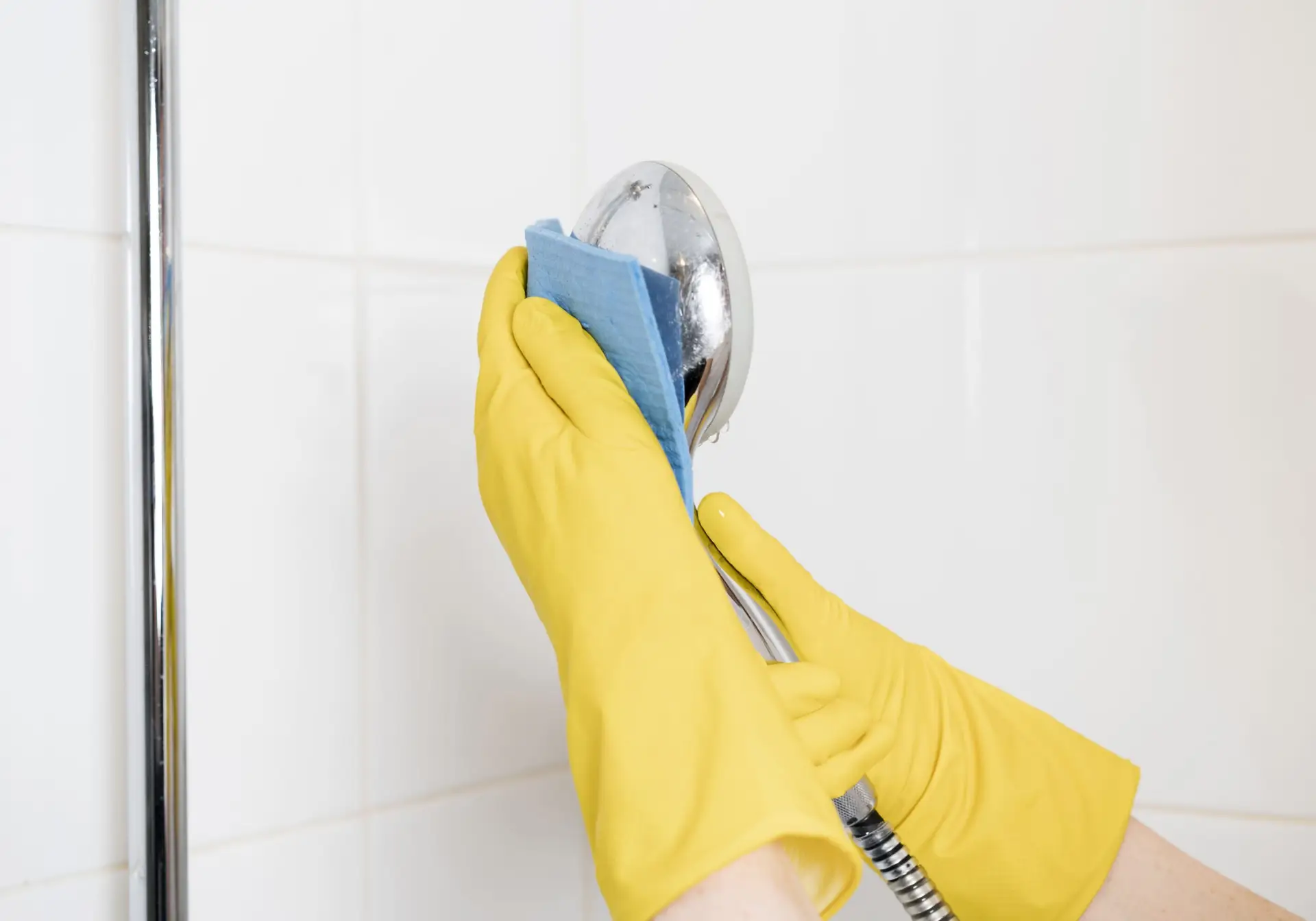
- Remove the bag, turn the water on at full pressure for a few minutes to flush out the loosened debris, and wipe the nozzles clean with a soft cloth.
How to Deep Clean a Removable Shower Head
If you can unscrew the fixture, you will achieve a better clean:
- Unscrew the shower head and place it in a bowl filled with vinegar.
- Soak for at least an hour.
- Use an old, soft-bristled toothbrush to gently scrub the nozzles. The loosened deposits should come off easily.
- Rinse thoroughly under warm running water and reattach.
What to Avoid When Cleaning Shower Fixtures
- Bleach: It is ineffective against mineral deposits and can be hazardous when mixed with other bathroom cleaners.
- Harsh Scrubbers: Steel wool or metal brushes will ruin your chrome, brushed nickel, or oil-rubbed bronze finishes.
- Vinegar on Certain Finishes: Prolonged exposure to acid can damage natural brass, gold-plated, or delicate oil-rubbed bronze finishes. If you have high-end fixtures, check your manufacturer’s care guide first or limit the soak time to under 30 minutes.
How Often Should You Clean a Shower Head?
For optimal flow and hygiene, we recommend a deep cleaning every 3 to 6 months. If you live in an area with particularly hard water, you may want to perform a quick cleaning every quarter to prevent major clogs.
Bathroom Cleaning Tips for Hard Water Homes
Preventative care makes a world of difference:
- Wipe Dry: After your shower, use a quick squeegee or towel to wipe the fixture dry. Removing the water before it evaporates prevents mineral deposits from forming in the first place.
- Install a Water Softener: If you have severe hard water throughout your home, a whole-house water softener is the best long-term investment for your fixtures and your skin.
FAQ
How long should you soak a shower head in vinegar?
For most standard cleaning, 1 to 2 hours is sufficient. If the shower head is heavily clogged, you can leave it soaking overnight, but check your fixture’s finish type first to avoid potential discoloration.
Does vinegar remove limescale from shower heads?
Yes. The acetic acid in white vinegar breaks down the chemical bonds in limescale, turning hard calcium deposits into a soft, wipeable paste.
Can vinegar damage shower head finishes?
While safe for chrome and stainless steel, vinegar is an acid. Do not soak delicate finishes (like brass or gold-plated fixtures) for more than 30 minutes, and always rinse them thoroughly with fresh water afterward.
Why is my shower head still clogged after cleaning?
If soaking didn’t work, the mineral buildup may be inside the internal filter screen or the water restrictor. You may need to disassemble the head or clean the screen manually. If it persists, the mineral deposits may have caused internal corrosion.
How often should shower heads be cleaned?
Every 3 to 6 months is the industry standard for maintaining water flow and ensuring a hygienic shower environment.
Is your shower pressure lacking the power it used to have? At Jama Cleaning Services, we handle the details that make your home shine. From deep-cleaning your fixtures to maintaining your entire bathroom, we are here to help.
Book your professional home cleaning service with Jama Cleaning Services today!