How to Clean Grout on Kitchen Floor?

Grout is essentially a porous stone-like material that acts as a magnet for spills, dirt, and everyday kitchen traffic. Because the kitchen is the heart of the home, its grout faces unique challenges that differ significantly from other tiled areas in the house.
Quick Answer: Kitchen Grout Collects Grease as Well as Dirt
The primary difference in kitchen grout is the presence of airborne grease and food particles. Unlike bathroom grout, which mostly deals with soap scum and mildew, kitchen grout absorbs cooking oils that act as an adhesive, trapping dirt and making it much harder to scrub away with water alone.
Why kitchen grout stains differently than bathrooms
In a bathroom, the moisture is relatively clean. In a kitchen, moisture often comes in the form of steam carrying microscopic droplets of fat or sugar. When these settle into the grout lines, they go rancid and create a sticky environment. This means a standard mildew cleaner often fails in the kitchen because it isn’t designed to break down organic lipids (fats).
Best Methods to Clean Kitchen Grout
For most kitchen floors, you want a cleaning agent that can lift the stain without eroding the grout material itself.
Baking soda and dish soap
This is the most effective “first-response” method for kitchen floors because dish soap is specifically formulated to emulsify grease.
- The Paste: Mix baking soda with a few drops of grease-cutting dish soap until it reaches the consistency of toothpaste.
- The Application: Apply the paste to the grout lines using an old toothbrush.
- The Wait: Let it sit for 15–20 minutes to allow the soap to break down the surface oils.
- The Scrub: Scrub in a circular motion and rinse with warm water.
Hydrogen peroxide for deeper stains
If the grout is still discolored after degreasing, you may have deep-set organic stains from coffee, wine, or juice.
- Why it works: Hydrogen peroxide is a mild oxygen bleach that kills bacteria and lifts pigments without the harsh fumes of chlorine bleach.
- Method: Pour a small amount of 3% hydrogen peroxide directly onto the grout line. It will bubble slightly as it works. After 10 minutes, wipe away with a clean cloth.
Removing Grease from Grout Lines
Heavy grease buildup requires a more targeted approach, especially near stoves and food preparation areas.
Degreasing safely
For heavy buildup, use a dedicated alkaline degreaser. Avoid highly acidic cleaners (like those containing high concentrations of lemon) as they can slowly dissolve the cement in the grout.
- Pro Tip: If using a commercial degreaser, apply it and let it “dwell” for the time recommended on the label. The chemical reaction does the heavy lifting so you don’t have to scrub as hard.
Avoiding slippery residue
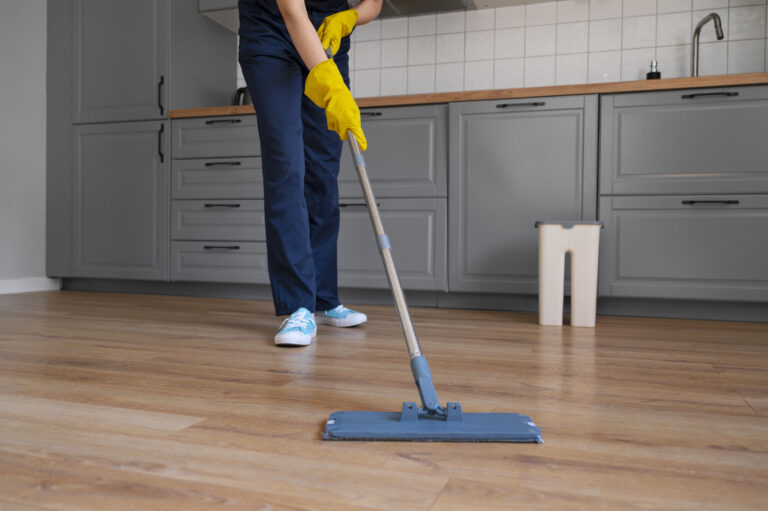
The biggest mistake in kitchen floor cleaning is leaving behind a soap film. A soapy floor is a magnet for new dirt and can be dangerously slippery. Always perform a “rinse pass” with a clean mop and plain warm water to ensure all surfactants are removed.
Preventing Future Grout Stains
The best way to clean grout is to ensure it never gets dirty in the first place.
Sealing grout
Grout is naturally porous. A grout sealer acts as a “plug” for those pores, preventing liquids from soaking in.
- Testing your seal: Drop a few beads of water on your grout line. If the water stays in a bead, it’s sealed. If it disappears into the grout, it’s time to reseal.
Regular floor maintenance schedule
- Daily: Sweep or vacuum. Removing dry grit prevents it from being ground into the grout by footsteps.
- Weekly: Mop with a neutral pH cleaner. Avoid “mop and glow” products which create a waxy buildup on the grout that eventually turns yellow.
FAQs
Can I use vinegar on kitchen grout?
Avoid it. While vinegar is great for many things, it is an acid. Frequent use of vinegar on unsealed grout can weaken the structure of the cement, causing it to crumble or “sand” over time.
How often should kitchen grout be cleaned?
Deep cleaning of grout lines should be done every 6 to 12 months, depending on the volume of cooking and foot traffic. Regular weekly mopping should keep surface dirt at bay between deep cleans.
When should grout be resealed?
Typically, kitchen grout should be resealed every year. Because the kitchen floor is mopped more frequently than other rooms, the sealer wears down faster.
Tired of scrubbing on your hands and knees? If your kitchen grout has reached the point where DIY methods aren’t enough, it’s time for a professional restoration. Our high-pressure steam extraction process removes 99% of embedded grease and bacteria, followed by a premium color-match seal that makes your floors look brand new. Call us today for a free estimate and give your kitchen the deep clean it deserves!