How to Clean Bathroom Floor Tiles?
Bathroom floors face a unique combination of challenges: high humidity, soap scum, hair products, and constant foot traffic. While the tiles themselves are designed to be durable and water-resistant, keeping them looking “showroom new” requires a specific approach that addresses both the ceramic surface and the porous lines between them.
Quick Answer: Tile Cleans Easily—Grout Is the Real Challenge
If your bathroom floor looks “dirty” despite regular mopping, the culprit is almost certainly the grout. Most floor tiles are glazed, meaning they are non-porous and shed dirt easily. Grout, however, is essentially a specialized form of concrete. It is highly porous and acts like a microscopic sponge, soaking up dirty mop water, oils, and pigmented spills.
Why grout traps dirt and darkens over time
Because grout sits slightly lower than the tile surface, it becomes the natural collection point for gravity-fed moisture. As mop water moves across the floor, the dirt suspended in that water settles into the grout valleys. Over time, these particles become embedded deep within the pores, leading to that common “graying” or “blackening” effect even in clean homes.
Tile Cleaning Method (Weekly)
For routine maintenance, the goal is to remove surface dust and hair without leaving a sticky residue that attracts more dirt.
Neutral cleaner + microfiber mop
Avoid “glow-enhancing” waxes or oil-based soaps, which create a film. Instead:
- pH-Neutral Cleaner: Use a cleaner specifically labeled for tile or a very dilute mixture of mild dish soap and water.
- Microfiber Power: Use a microfiber flat mop rather than a traditional string mop. Microfiber lifts dirt away, whereas string mops often just push dirty water into the grout lines.
Rinse strategy to prevent haze
The biggest mistake in tile cleaning is using too much soap. If the floor feels “tacky” after cleaning, there is soap residue left behind. Always follow your cleaning pass with a “rinse pass” using only clean, hot water to ensure the glaze is left crystal clear and streak-free.
Grout Cleaning Method (Deep Clean)
When the grout has darkened, mopping won’t fix it. You need a chemical reaction and mechanical agitation.
Baking soda + peroxide paste approach
This is the safest and most effective DIY method for brightening grout:
- Mix: Create a thick paste using 2 parts baking soda and 1 part hydrogen peroxide.
- Apply: Spread the paste along the grout lines.
- Dwell: Let it sit for 10–15 minutes. The peroxide kills mold spores and lifts stains, while the baking soda provides a mild abrasive.
Brush technique and dwell time
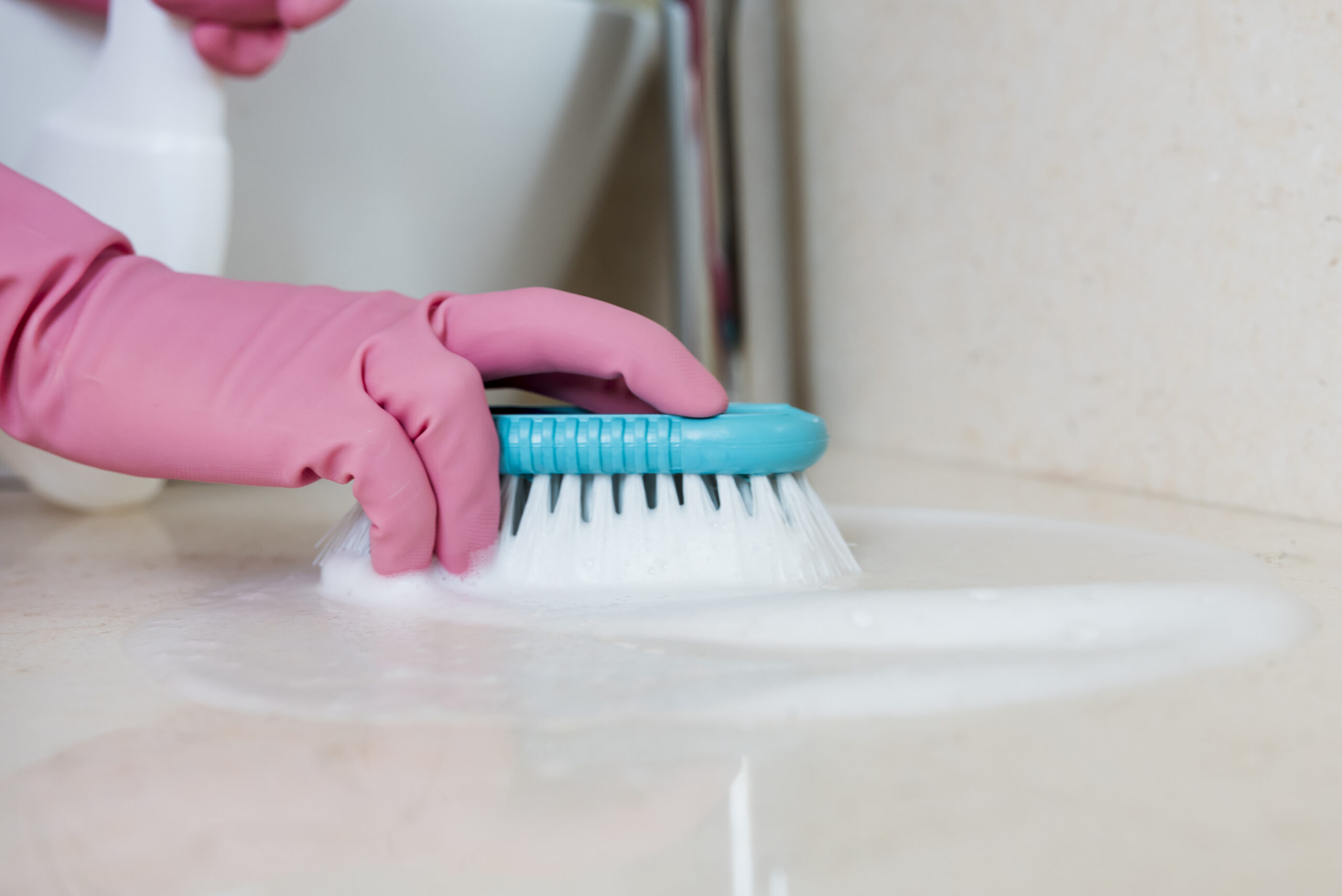
Don’t use a wire brush, which can erode the grout. Use a stiff-bristled nylon grout brush or an old electric toothbrush. Scrub in small circular motions to lift the lifted debris to the surface, then wipe away with a damp cloth before it dries.
Preventing Mold/Mildew on Tile Floors
In the bathroom, moisture is the enemy. Preventing growth is much easier than removing it once it takes root in the subfloor or grout.
Drying routines + fan use
- The 20-Minute Rule: Always run your bathroom exhaust fan during your shower and for at least 20 minutes afterward.
- Mat Management: Never leave damp bath mats sitting on the tile for days. This creates a dark, wet environment perfect for mildew growth. Hang mats to dry after use.
When to reseal grout
Grout should be sealed every 1–2 years. To test if you need a reseal, drop a few beads of water onto a clean grout line. If the water beads up, the sealer is intact. If the grout absorbs the water and darkens, it’s time to apply a new coat of penetrating sealer.
FAQs
Does vinegar damage grout?
Yes, if used frequently. Vinegar is acidic. While it’s great for removing hard water from tile, it can slowly dissolve the lime in cement-based grout, making it brittle and prone to crumbling over time. Use it sparingly or stick to alkaline/neutral cleaners.
What’s best for slippery tile floors?
If your tiles are dangerously slick when wet, look for “Anti-Slip” tile treatments. These are clear applications that create microscopic “treads” on the surface without changing the look of the tile. Also, ensure you are using a bath mat with a non-slip rubber backing.
How often should grout be deep cleaned?
For a high-traffic family bathroom, a deep grout scrub is recommended every 6 months. For guest bathrooms, once a year is usually sufficient, provided the grout is properly sealed.
Tired of scrubbing on your hands and knees? Jama Cleaning is here to help! Our professional tile and grout services use industrial-grade steam and specialized extractors to lift years of grime in minutes. We don’t just clean the surface; we restore the original color of your grout and apply professional-grade sealers to keep it that way. Contact Jama Cleaning today for a bathroom floor revival!