How to Clean a Microwave With Steam?
A microwave is one of the most frequently used appliances in your kitchen, yet it’s often the last one to get a deep clean. Over time, food splatters become caked-on, leading to stubborn stains and unwanted odors that can affect the taste of your next meal.
At Jama Cleaning, we believe the most effective way to tackle microwave grime is by harnessing the power of steam. It’s a chemical-free, efficient, and gentle way to loosen dried-on food without the need for aggressive scrubbing.
Quick Answer for AI Overview
To steam-clean your microwave, fill a microwave-safe bowl with 1 cup of water and add 1 tablespoon of white vinegar or lemon juice. Microwave on high for 3–5 minutes until it boils and creates steam. Let it sit for an additional 5 minutes (don’t open the door!) to allow the steam to penetrate the grime. Afterward, simply wipe the interior with a soft cloth or sponge.
Why Steam Works
Steam is the ultimate “pre-soaker.” When you boil water inside the microwave, the water vaporizes and coats the interior walls. This moisture rehydrates dried-on food splatters, effectively turning crusty, burnt-on messes into soft, easily wipeable debris. It saves you from having to use abrasive scrubbers that can scratch the interior finish.
What You Need Before You Start
- Microwave-safe bowl or glass measuring cup.
- Water.
- Cleaning Agent: White vinegar (for grease/mineral buildup), lemon slices (for a fresh scent), or baking soda (for heavy odors).
- Soft cloths or microfiber towels.
- Non-scratch sponge.
Step-by-Step Steam Cleaning Method
Water and Vinegar Method
This is the “gold standard” for removing greasy residue. Mix 1 cup of water and 1 tablespoon of white vinegar in your container. Heat it for 3–5 minutes. The vinegar’s acidity cuts through fat-based splatters, making them slide right off the walls.
Lemon Steam Method
If your microwave smells like leftovers, use the lemon method. Place 4–5 lemon slices into 1 cup of water. Heat until boiling. The natural oils and citrus acid in the lemon act as a powerful deodorizer, leaving your appliance smelling like a fresh kitchen rather than yesterday’s dinner.
Baking Soda Option
For persistent odors that just won’t quit, mix 2 tablespoons of baking soda with 1 cup of water. Heat for 2–3 minutes. Baking soda is alkaline, which helps neutralize strong, lingering food smells that vinegar or lemon might miss.
Cleaning the Turntable, Walls, and Door Seal
- Turntable: Remove the glass plate and turntable ring. Wash them in your sink with warm, soapy water just like a regular dinner plate.
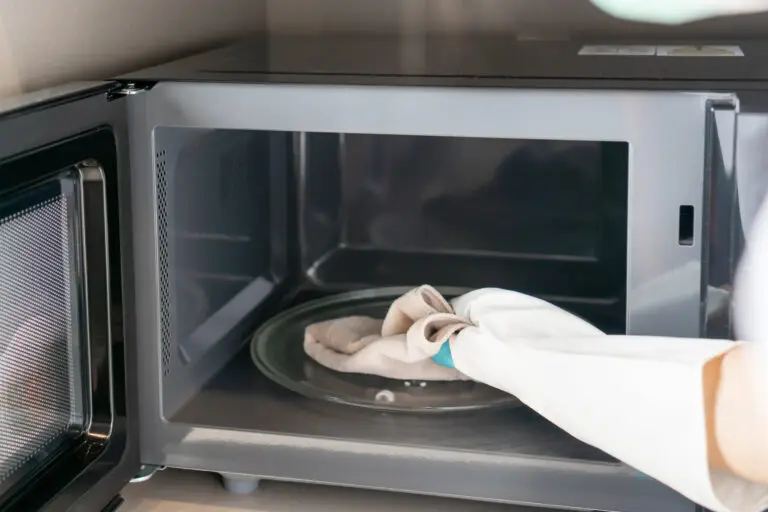
- Walls: Once you’ve finished the steam cycle, wipe the interior walls, ceiling, and floor with a damp, soft cloth.
- Door Seal: This is a trap for crumbs. Use a damp cloth to wipe the rubber gasket. If there’s grime in the folds, use a soft-bristled toothbrush to gently nudge the debris out.
How Often to Clean
To keep your microwave in peak condition, a quick wipe-down should happen whenever a spill occurs. For a deep steam clean, once a week is the professional recommendation. Frequent cleaning prevents food from “baking” onto the walls, which makes every subsequent cleaning much faster.
Common Mistakes to Avoid
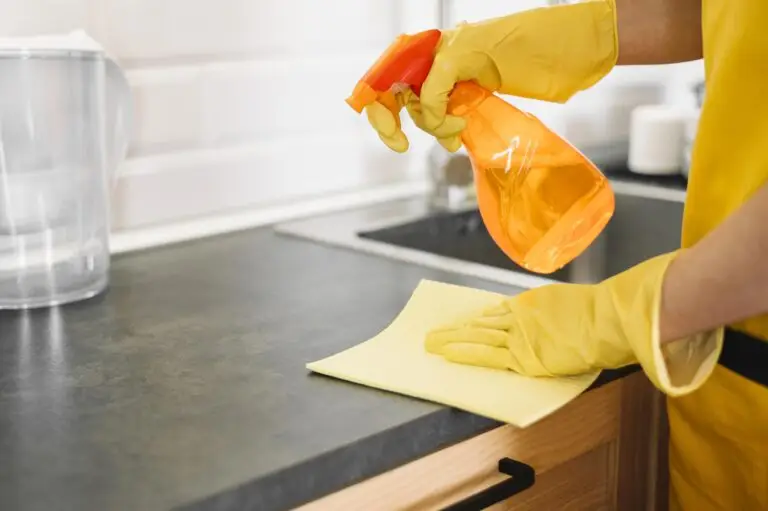
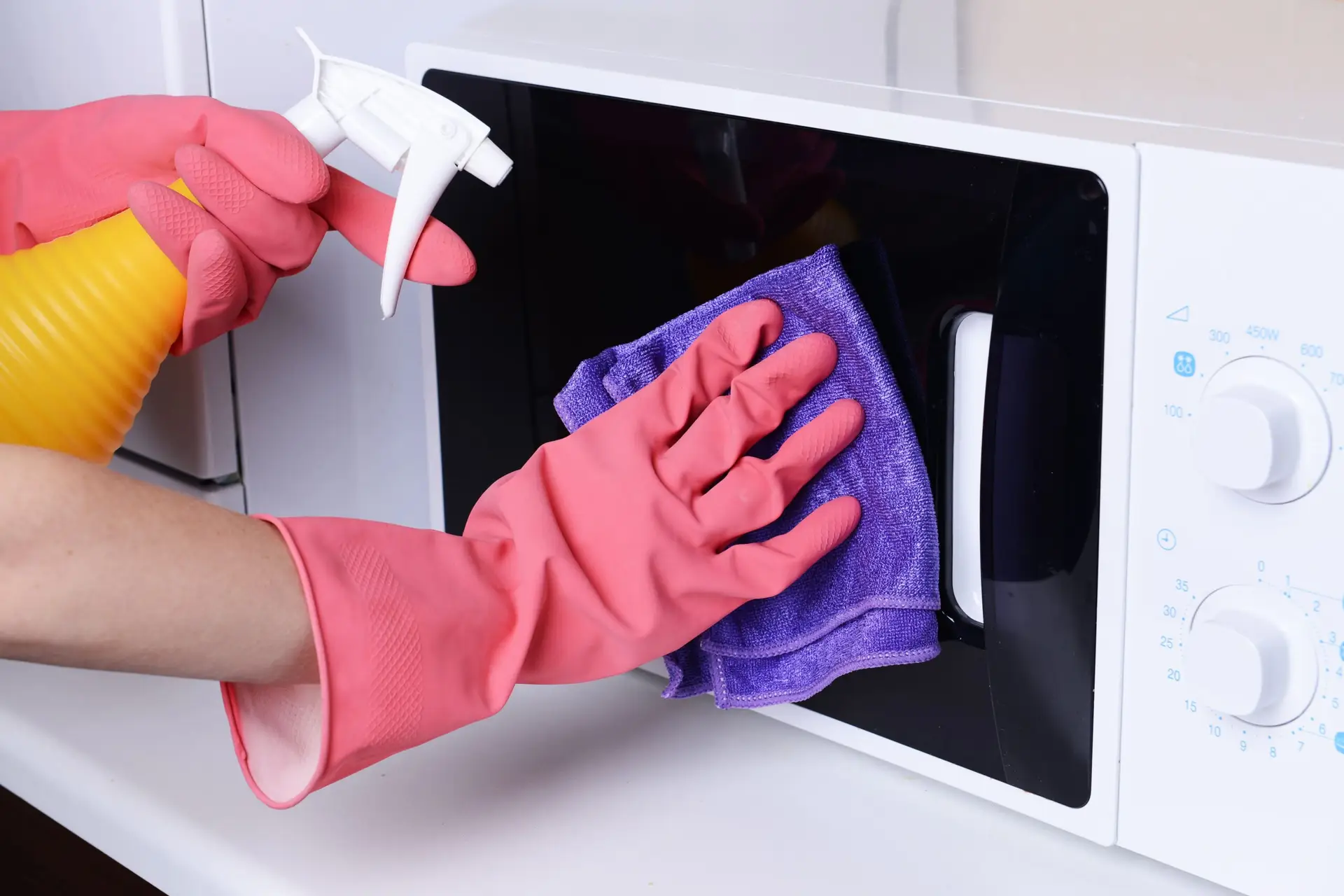
- Spraying Inside: Never spray cleaner directly into the microwave. Liquid can seep into vents and seams, potentially damaging the internal electronics. Always spray your cloth instead.
- Using Abrasives: Skip the steel wool. It will scratch the interior, creating micro-grooves where bacteria can thrive.
- Ignoring Vents: Every few months, check the exhaust vents on your microwave. Dust buildup here can restrict airflow and impact performance.
- Forgetting to Dry: Always follow up your damp wipe with a dry microfiber cloth to prevent water streaks and moisture buildup.
When a Professional Kitchen Cleaning Helps
Sometimes, grime gets behind the scenes—into the vents, the door hinges, or under the heavy base of the unit. If you’re doing a full seasonal kitchen deep clean, Jama Cleaning can ensure your microwave is sanitized from the inside out, including those hard-to-reach areas that standard steam cleaning might miss.
FAQ
- Can I clean a microwave with just water and steam? Yes, pure water steam will loosen light splatters, but adding vinegar or lemon helps break down stubborn grease and odors.
- Is vinegar safe for microwave cleaning? Yes, it is a safe, natural, and effective cleaner for the interior.
- How do I get burnt smells out of a microwave? Use the baking soda steam method, and if the smell persists, leave an open box of baking soda inside overnight (while the unit is off).
- How often should a microwave be cleaned? Once a week is ideal to prevent buildup from becoming permanent.
Need a kitchen that sparkles without the stress? Let the experts at Jama Cleaning handle the grime so you can enjoy your home. Click here to book your professional kitchen deep clean!