Best Cleaner for Wood Cabinets
Choosing the right cleaner for your wood cabinets is the most critical step in kitchen maintenance. In American households, cabinetry often features a variety of finishes—from traditional polyurethane and lacquer to modern water-based paints. Using the wrong chemical can lead to a costly “melted” finish or permanent discoloration. Understanding the chemistry of your cleaner ensures your kitchen stays beautiful for decades.
Quick Answer: Mild Soap or Cabinet-Specific Cleaners
For the vast majority of wood cabinets, the gold standard is a simple solution of mild dish soap and warm water. If you prefer a retail product, look for cleaners labeled specifically for “finished wood” or “cabinets” rather than general all-purpose cleaners. These formulations are pH-balanced to ensure they cut through lipids (fats and oils) without dissolving the resins in the wood’s protective topcoat.
Why less is more with wood
Wood finishes are designed to be water-resistant, but they are not waterproof. Using excessive amounts of cleaner or high-strength solvents creates a risk of liquid seeping into the grain or underneath the finish. This leads to “clouding”—a milky white haze trapped under the surface—that usually requires professional refinishing to fix. By using the “less is more” approach, you preserve the structural and aesthetic integrity of the wood.
Best Cleaner Options for Wood Cabinets
Dish soap and warm water
This is the most recommended solution by American cabinetry manufacturers. Dish soap is engineered to break down animal fats and vegetable oils—the primary components of kitchen grime.
- The Mix: Two tablespoons of mild dish soap per two gallons of warm water.
- The Benefit: It is non-toxic, inexpensive, and incredibly effective at removing fresh grease without leaving a chemical film.
Commercial wood cabinet cleaners
High-end commercial cleaners, such as those from brands like Murphy Oil Soap or Method, offer convenience.
- Oil-Based Soaps: Excellent for traditional stained wood; they clean while adding a very light layer of moisture.
- Specialty Sprays: These are often “spray and wipe” solutions that are pre-diluted to safe levels, preventing the user from accidentally over-concentrating the cleaner.
DIY solutions (when appropriate)
While we generally advise caution with DIY mixes, a 50/50 solution of distilled white vinegar and warm water can be used as a mild disinfectant.
- Warning: Only use this on cabinets with a healthy, intact finish. The acidity of vinegar can dull a worn-out lacquer over time. Always test a small, inconspicuous area first, such as the inside of a door.
Matching Cleaners to Cabinet Finish
Painted cabinets
Painted cabinets (common in modern American farmhouse and transitional styles) require extra care. Because paint sits on top of the wood rather than soaking in like a stain, it can be prone to chipping if the cleaner is too abrasive.
- Recommendation: Use only the mildest dish soap. Avoid any cleaners containing “scrubbing beads” or baking soda, which act as sandpaper on the paint’s sheen.
Stained or sealed wood
Stained cabinets are usually protected by a clear topcoat like polyurethane.
- Recommendation: These can handle oil-based wood cleaners well. These cleaners help highlight the wood grain and provide a sacrificial layer of protection against moisture.
Long-Term Cabinet Care Tips
Preventing grease buildup
The best “cleaner” is prevention. Use your range hood’s exhaust fan every time you cook—even if you are just boiling water. This captures airborne grease before it can settle on your upper cabinets.
Maintaining finish integrity
Inspect the areas around the sink and dishwasher monthly. Steam from the dishwasher and splashes from the sink are the leading causes of finish failure. If you see the finish starting to peel or turn white, switch to a dry-cleaning method (microfiber only) until the area can be resealed.
FAQs
Are oil-based cleaners good for cabinets?
Yes, but with a caveat. Oil-based soaps are excellent for cleaning, but “lemon oils” or furniture polishes that contain high amounts of mineral oil should be used sparingly. They can attract dust, leading to a “gritty” feel if not buffed off completely with a clean cloth.
What do professionals recommend?
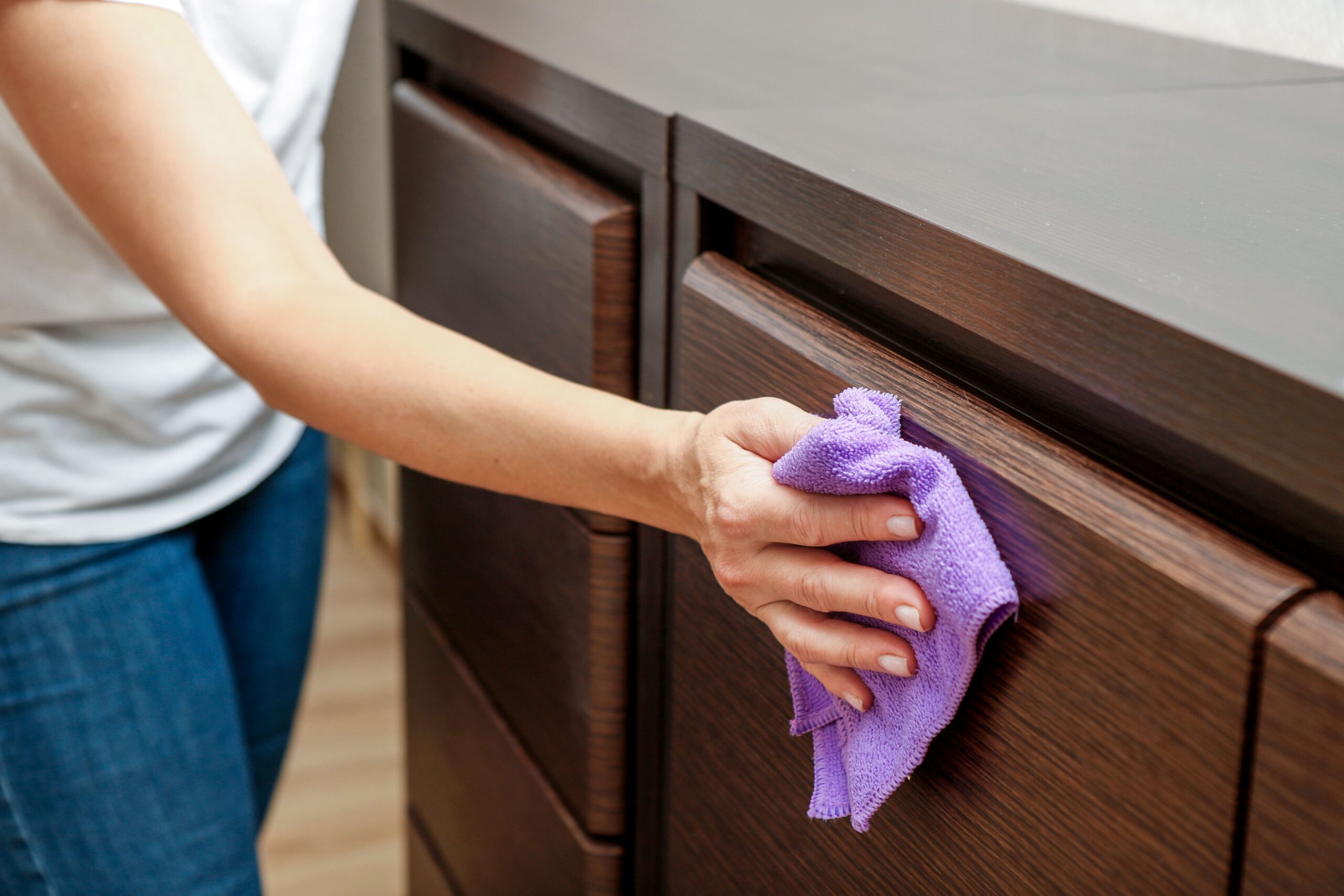
Most professional cleaning services in the U.S. utilize a “two-cloth” system: one microfiber cloth dampened with a pH-neutral cleaner to lift the dirt, and a second, high-pile dry microfiber to buff the surface to a streak-free shine. This prevents any cleaner residue from remaining on the wood.
How often should cabinets be deep cleaned?
In a typical American household, a deep clean—including the tops of the cabinets and the interior shelves—should be done every 3 to 6 months. Regular weekly “maintenance wipes” of the door faces will make these deep cleaning sessions much faster and more effective.
Maintaining the luster of your cabinetry requires professional knowledge and the right tools. At Jama Cleaning, we understand the specific needs of various wood species and finishes found in premium American homes. Our technicians are trained to identify your cabinet type and apply the safest, most effective cleaning agents available. Let us handle the heavy degreasing and meticulous polishing, giving you a kitchen that looks brand new without the risk of damage. Contact Jama Cleaning today for a professional consultation and a spotless kitchen.