Cleaning Wood Cabinets
In the heart of the American home, wood cabinetry is often the most significant investment in the kitchen. Whether your cabinets are solid oak, cherry, or high-end maple veneers, the finish is what protects the wood from the heat, humidity, and grease of daily cooking. Maintaining that finish requires a delicate balance—using enough power to cut through kitchen grime without stripping the protective sealant or warping the wood.
Quick Answer: Gentle Cleaners Preserve Wood Finishes
The most effective and safest way to clean wood cabinets is using mild dish soap and warm water, or a cleaner specifically formulated for finished wood. Harsh chemical degreasers might provide instant gratification by removing grease, but they often contain solvents that can dull, soften, or eventually peel the cabinet’s topcoat. For long-term preservation, the rule of thumb is to use the mildest solution possible that still gets the job done.
Why water and harsh products damage cabinets
Wood is a porous, organic material. While the finish (varnish, lacquer, or paint) acts as a shield, it is not invincible. Excessive water can seep into joints and wood grain, causing the wood to swell, warp, or “check” (crack). On the other hand, harsh chemicals like bleach or undiluted solvents break down the chemical bonds of the finish, leading to a cloudy appearance or a surface that feels permanently tacky.
How Often Wood Cabinets Should Be Cleaned
In a busy American kitchen, grease and food particles are airborne. If left too long, these substances undergo a chemical change and bond to the cabinet surface, making them much harder to remove later.
Daily vs. deep cleaning routines
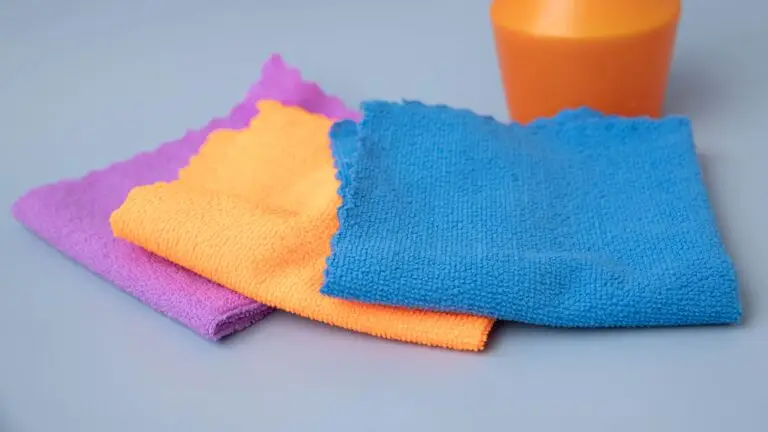
- Daily/Spot Cleaning: Wipe down the cabinets near the stove and handles every evening. This prevents the “layering” of grease. Use a dry or very slightly damp microfiber cloth.
- Monthly Maintenance: Once a month, perform a more thorough wipe-down of all cabinet faces to remove dust that has mixed with kitchen oils, which creates a dull film.
- Seasonal Deep Cleaning: Twice a year, empty the cabinets to clean the interiors and use a dedicated wood soap (like Murphy Oil Soap) on the exteriors to nourish the finish and reach deep into the crevices of raised-panel doors.
Step-by-Step Wood Cabinet Cleaning
Dusting and surface cleaning
Before applying any liquid, always start by dusting. Use a clean, dry microfiber cloth or a high-quality duster to remove loose particles. If you apply liquid to a dusty cabinet, you essentially create a “mud” that can scratch the finish as you wipe.
Removing grease buildup
For stubborn kitchen grease, mix a few drops of a grease-cutting dish soap in a bowl of warm water.
- Dip: Submerge a soft cloth in the soapy water.
- Wring: This is the most important step—wring the cloth until it is only slightly damp, not dripping.
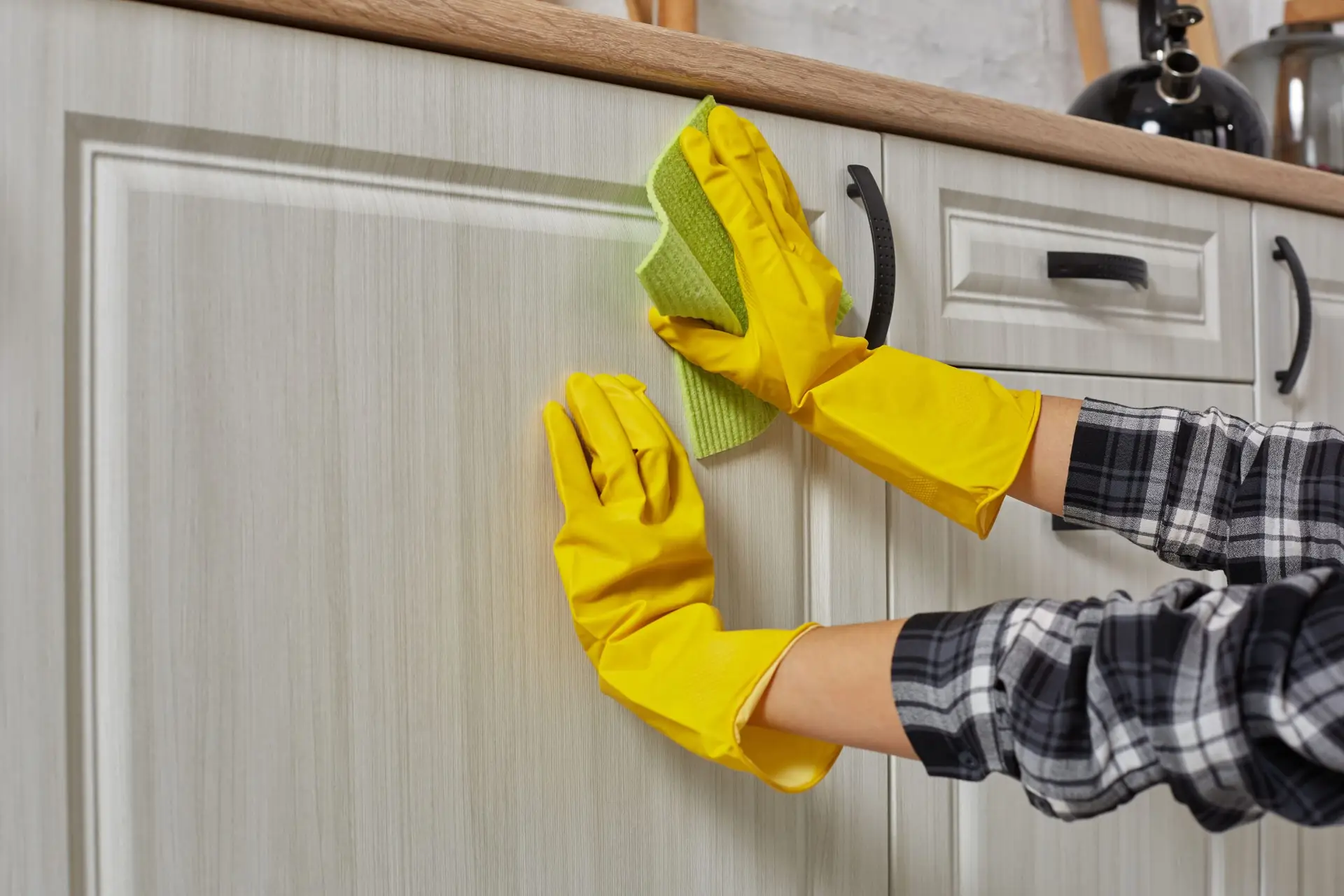
- Wipe: Follow the grain of the wood. For stubborn spots, apply gentle circular pressure.
- Dry: Immediately follow with a second, dry microfiber cloth to remove any residual moisture.
Handles and edges (high-touch zones)
The edges of cabinet doors and the areas surrounding handles are “high-touch zones.” These spots accumulate skin oils and sweat, which are surprisingly acidic and can wear down finishes faster than cooking grease. Pay extra attention to these areas, ensuring they are thoroughly cleaned and, most importantly, dried.
What to Avoid on Wood Cabinets
Abrasive sponges
Never use the “scrubby” side of a kitchen sponge, steel wool, or any abrasive pad. Even if the grease is thick, these tools will create microscopic scratches in the lacquer. Once the lacquer is scratched, moisture can enter the wood, leading to permanent dark staining or “blooming.”
Ammonia and excessive moisture
Avoid cleaners containing ammonia or bleach, as they are far too alkaline for wood finishes and will cause discoloration. Furthermore, never leave a wet cloth hanging over a cabinet door to dry—this is a common cause of finish failure and wood rot in American kitchens.
FAQs
Can I use vinegar on wood cabinets?
Vinegar is acidic. While it is a great natural cleaner for many surfaces, using it regularly on finished wood can eventually eat away at the clear coat. If you must use it for a heavy-duty “strip clean,” always dilute it (1 part vinegar to 4 parts water) and rinse it off immediately with a damp cloth followed by a dry one.
Why do cabinets feel sticky?
If your cabinets feel sticky even after cleaning, it is usually one of two things: a buildup of “polymerized” grease (oil that has hardened over time) or, more seriously, the finish itself is failing and becoming chemically unstable. If a mild soap doesn’t fix the stickiness, a specialized wood cleaner may be needed.
How do I restore cabinet shine?
To restore a dull finish, avoid “waxes” which can create a gummy buildup. Instead, use a high-quality wood polish or a “feed-and-wax” product containing beeswax and orange oil. These products fill in minor scratches and hydrate the wood without leaving a thick, synthetic residue.
Your kitchen cabinets are the focal point of your home’s aesthetic and value. Over time, the rigors of cooking and daily life can leave them looking dull and greasy. At Jama Cleaning, we specialize in professional cabinetry care that revitalizes your kitchen without risking the integrity of your wood finishes. Our expert team uses pH-balanced, professional-grade products and techniques to remove years of buildup, leaving your cabinets looking as brilliant as the day they were installed. Experience the difference of a truly professional clean—contact Jama Cleaning today to schedule your kitchen restoration.