What Can I Use to Clean Quartz Countertops?
Quartz countertops are a blend of natural stone and synthetic resins. This unique composition means you cannot treat them exactly like granite or laminate. Choosing the right products is essential to maintaining the factory seal and preventing chemical “burns” or dulling of the surface.
Best Household Products for Quartz
You don’t need an expensive chemical arsenal to keep quartz clean. In most cases, the best products are already under your kitchen sink.
Dish soap and warm water
The gold standard for quartz care is basic, liquid dish soap (such as Dawn or Palmolive). These soaps are designed to break down grease and food proteins without being acidic or alkaline. A few drops in a gallon of warm water create the perfect maintenance solution.
pH-neutral cleaners
Quartz is sensitive to “pH shock.” Products that are too acidic (low pH) or too basic/alkaline (high pH) can damage the resin. If you aren’t using dish soap, look for specialized “Stone Cleaners” that explicitly state they are pH-neutral. These ensure that the chemical bond of the countertop remains intact over years of use.
Store-Bought Cleaners Safe for Quartz
If you prefer the convenience of a spray bottle from the cleaning aisle, you must choose carefully to avoid long-term damage.
Non-abrasive surface cleaners
Avoid any cleaners with “scrubbing beads” or “added grit.” Safe options often include:
- Method (All-purpose versions, provided they are pH-balanced)
- Mrs. Meyer’s Clean Day (Multi-surface sprays)
- Seventh Generation (Free & Clear glass and surface cleaners)
What labels to look for
When shopping for a new cleaner, look for these specific keywords on the packaging:
- “Safe for Quartz”: Manufacturers are increasingly labeling products for engineered stone.
- “Ammonia-Free”: Ammonia can strip the shine from resin.
- “Bleach-Free”: Bleach is a common culprit for permanent countertop discoloration.
- “Non-Toxic”: Generally indicates milder surfactants that won’t etch the surface.
Cleaning Quartz by Situation
Different types of messes require slightly different approaches to ensure you aren’t over-cleaning or under-cleaning the stone.
Daily messes
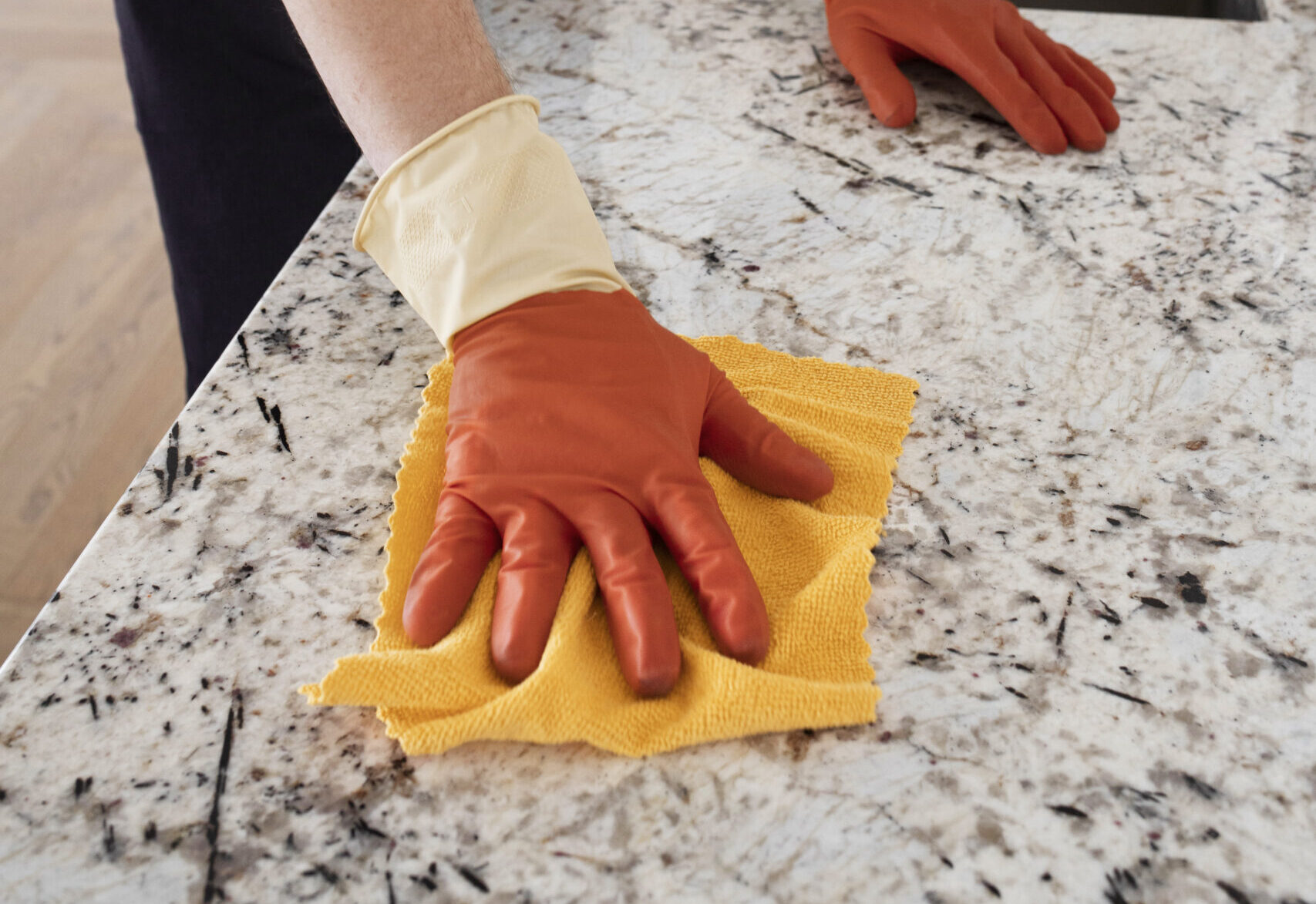
For crumbs, light dust, and water spots, a quick spray of a 50/50 mixture of water and a mild stone cleaner is sufficient. Wipe in a circular motion with a microfiber cloth to prevent streaks.
Stubborn stains
For “sticky” messes like jelly or dried wine:
- Apply a pH-neutral cleaner directly to the spot.
- Let it sit for 3–5 minutes (do not let it dry).
- Wipe with a soft cloth.
- Pro Tip: If the residue is physical (like dried wax or glue), use a plastic scraper (never metal) to gently lift it before cleaning.
FAQs
Can you use vinegar or bleach on quartz?
No. Vinegar is highly acidic and can eventually dull the surface. Bleach is highly alkaline and can cause “chemical etching,” leaving white, cloudy spots that are permanent. If you accidentally spill either on your counter, rinse with water immediately.
What damages quartz countertops?
- Heat: Placing a hot pan directly on the surface can crack the resin (thermal shock).
- High pH Chemicals: Oven cleaners and drain openers.
- Physical Abrasion: Scouring pads or knives used directly on the surface.
Do professionals use special cleaners?
Professional cleaning services typically use industrial-grade, pH-neutral stone soaps that are highly concentrated. These products are designed to lift oils without leaving the “filmy” residue that some grocery-store all-purpose cleaners can leave behind.
Get the Professional Touch with Jama Cleaning
While daily care is simple, periodic professional maintenance ensures your quartz stays as brilliant as the day it was installed. At Jama Cleaning, we use premium, professional-grade stone care products that are 100% safe for engineered quartz. We understand the science behind your surfaces and provide a streak-free, sanitized finish that protects your investment.
Ready for a spotless home? Contact Jama Cleaning today for a professional estimate!