How to Remove Pet Stains From Carpet?
Pet accidents are a common household challenge, but they are more than just a surface-level mess. Because pet urine contains uric acid, urea, and proteins, it creates a chemical bond with carpet fibers and padding that standard soaps cannot break.
At Jama Cleaning Services, we believe the “science” of cleaning is just as important as the technique. Here is the expert guide to effectively neutralizing stains and odors without damaging your flooring.
Why Pet Stains Are Hard to Remove
Pet urine is not just a liquid; it is a complex biological compound. When urine dries, the water evaporates, but uric acid crystals remain embedded deep in the carpet fibers, padding, and even the subfloor.
- These crystals are impervious to standard household detergents.
- Humidity, steam cleaning, or even rain can “reactivate” these crystals, causing the odor to return long after the stain seems to have disappeared.
- Ammonia-based cleaners often fail because they share a chemical profile with urine, sometimes making the smell worse and encouraging your pet to re-mark the same spot.
What to Do Immediately After a Pet Accident
- Blot, Never Scrub: Use a clean, dry white cloth or paper towel to absorb as much liquid as possible. Scrubbing forces the urine deeper into the carpet backing and damages the fiber structure.
- Work from the Outside In: Clean toward the center of the stain to prevent it from spreading to a larger area.
- Extract: If you have a small carpet extractor, use it to pull the moisture out. If not, place a stack of paper towels over the spot and weigh them down with a heavy, non-staining object for 15–20 minutes.
Best Products for Pet Stains
- Enzyme Cleaners: These are the “gold standard.” They contain live bacteria that literally “eat” the organic matter (proteins and uric acid) at a molecular level, permanently eliminating the odor source.
- Baking Soda: Useful for odor absorption after the stain has been treated and the area is dry.
- Hydrogen Peroxide (3%): Effective for stubborn, protein-based stains, but must be spot-tested as it can bleach darker carpets.
How to Remove Fresh Pet Stains
- Blot: Remove excess liquid thoroughly.
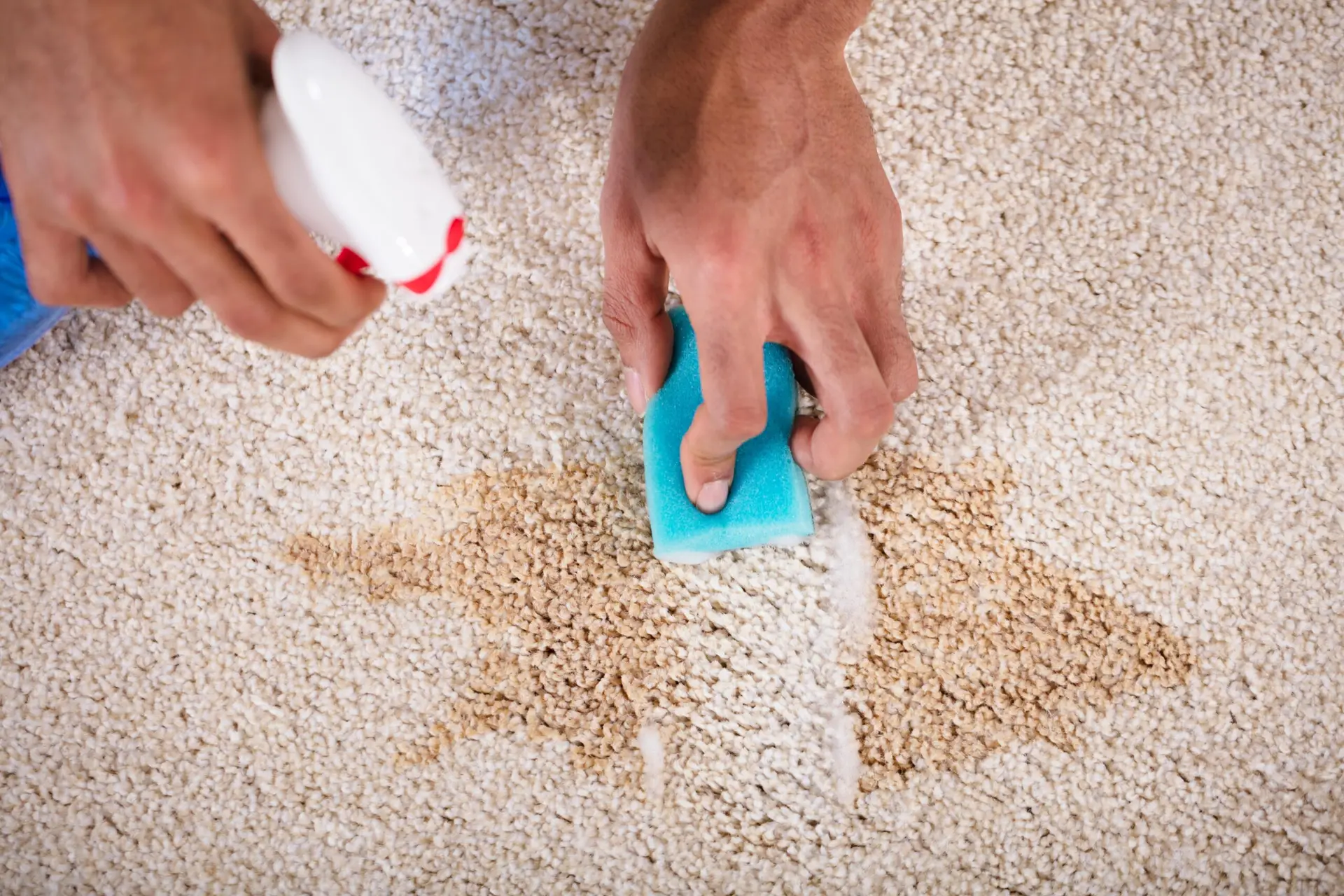
- Apply Enzyme Cleaner: Spray the area generously. The cleaner must reach as deep as the urine did (sometimes this means using more product than you think).
- Dwell Time: Let it sit for 10–15 minutes (or as directed). This gives the enzymes time to break down the biological compounds.
- Blot Again: Blot the excess liquid and allow the area to air dry completely. Avoid using heat (no hairdryers or steam cleaners), as heat can “set” the protein stain.
How to Treat Old Pet Stains
Old stains require patience.
- Rehydration: You may need to use an enzyme cleaner more aggressively, perhaps leaving it to soak for several hours.
- Extraction: If the stain is deep, you may need a professional-grade extractor to pull the concentrated urine crystals out of the padding.
- Spot Test: Since old stains are often oxidized, always test any cleaner on a hidden area to ensure it doesn’t cause discoloration.
How to Remove Pet Odors From Carpet
If the odor persists, it usually means the source is still in the carpet pad or subfloor.
- Enzymatic Saturation: Use a high-quality enzyme product designed for deep-set odors.
- Airflow: Ensure the carpet dries within 24 hours. If it stays damp, mold and mildew will create a new smell that is just as difficult to remove.
- Baking Soda: For light surface odors, sprinkle baking soda over the area, leave it for an hour, and vacuum it up.
What Not to Do When Cleaning Pet Stains
- Don’t Use Heat: Never use steam cleaners or hot water on fresh protein stains. Heat “cooks” the protein, bonding it permanently to the fiber.
- Don’t Use Ammonia: As mentioned, it mimics the smell of urine and may attract your pet back to the same spot.
- Don’t Over-Saturate: Flooding the area can cause delamination of the carpet backing and damage the subfloor.
When Professional Cleaning Is Needed
If the odor returns during humid weather or if your pet repeatedly targets the same spot, the biological matter is likely in the underlayment or subfloor. At Jama Cleaning Services, we use industrial-grade extractors and professional enzymatic treatments that penetrate deeper than consumer-grade machines, effectively removing the source of the odor.
FAQ
What is the best cleaner for pet stains?
An enzymatic cleaner is the best choice. Unlike soaps, enzymes biologically digest the uric acid crystals that cause the smell.
Does vinegar remove dog urine smell?
Vinegar is a good deodorizer for some smells, but it does not break down uric acid crystals. It may mask the odor temporarily, but the smell will often return when the carpet gets humid.
Can baking soda remove pet odors?
It is excellent for surface odors. It acts as an absorbent, but it won’t remove the biological source of the smell deep in the padding.
How do you remove old pet stains from carpet?
Use an enzymatic cleaner designed for “old” or “set-in” stains, allowing for a longer dwell time so the enzymes can penetrate the dried crystals.
Why does pet odor come back after cleaning?
The odor returns because the uric acid crystals were never fully broken down. When the carpet is exposed to humidity or re-wetted, these crystals reactivate and release the trapped odor.
Is your carpet struggling with lingering odors?
Don’t let pet accidents compromise your home’s comfort. Let the professionals at Jama Cleaning Services restore your carpets with our deep-cleaning, enzyme-based extraction process.
Contact Jama Cleaning Services today to schedule your professional cleaning!