How to Mop Hardwood Floors Safely?
Hardwood floors are a significant investment and a hallmark of American home design. While they are incredibly durable, they are also organic materials that react to their environment. Cleaning them requires a delicate balance: you need enough moisture to remove grime, but not so much that you compromise the wood’s structural integrity.
Quick Answer: Damp Mopping Only
The golden rule for hardwood maintenance is that “wet” is the enemy, while “damp” is your friend. Unlike tile or linoleum, hardwood cannot be saturated with water without consequences.
Why excess water is harmful
Wood is naturally porous. Even if your floors are sealed with a high-quality polyurethane finish, there are microscopic gaps between the planks and in the grain. If water pools on the surface:
- Cupping and Warping: The wood absorbs the moisture and expands, causing the edges of the planks to rise higher than the center.
- Finish Peeling: Excessive moisture can get underneath the sealant, causing it to cloud, crack, or peel away.
- Mold and Rot: Water that seeps into the subfloor can lead to long-term structural damage and mold growth that is difficult and expensive to remediate.
What “damp” really means
A “damp” mop should feel almost dry to the touch. If you press the mop head against the floor and a puddle forms, it is too wet. Ideally, the moisture left behind after a pass should evaporate within 30 to 60 seconds. If the floor stays wet for minutes, you are using too much liquid.
Best Way to Mop Hardwood Floors
To achieve a streak-free, safe clean, follow this professional three-step process used by top-tier residential cleaning services across the U.S.
Sweep or vacuum first
Mopping a floor that hasn’t been de-dusted is simply moving wet sandpaper across your finish.
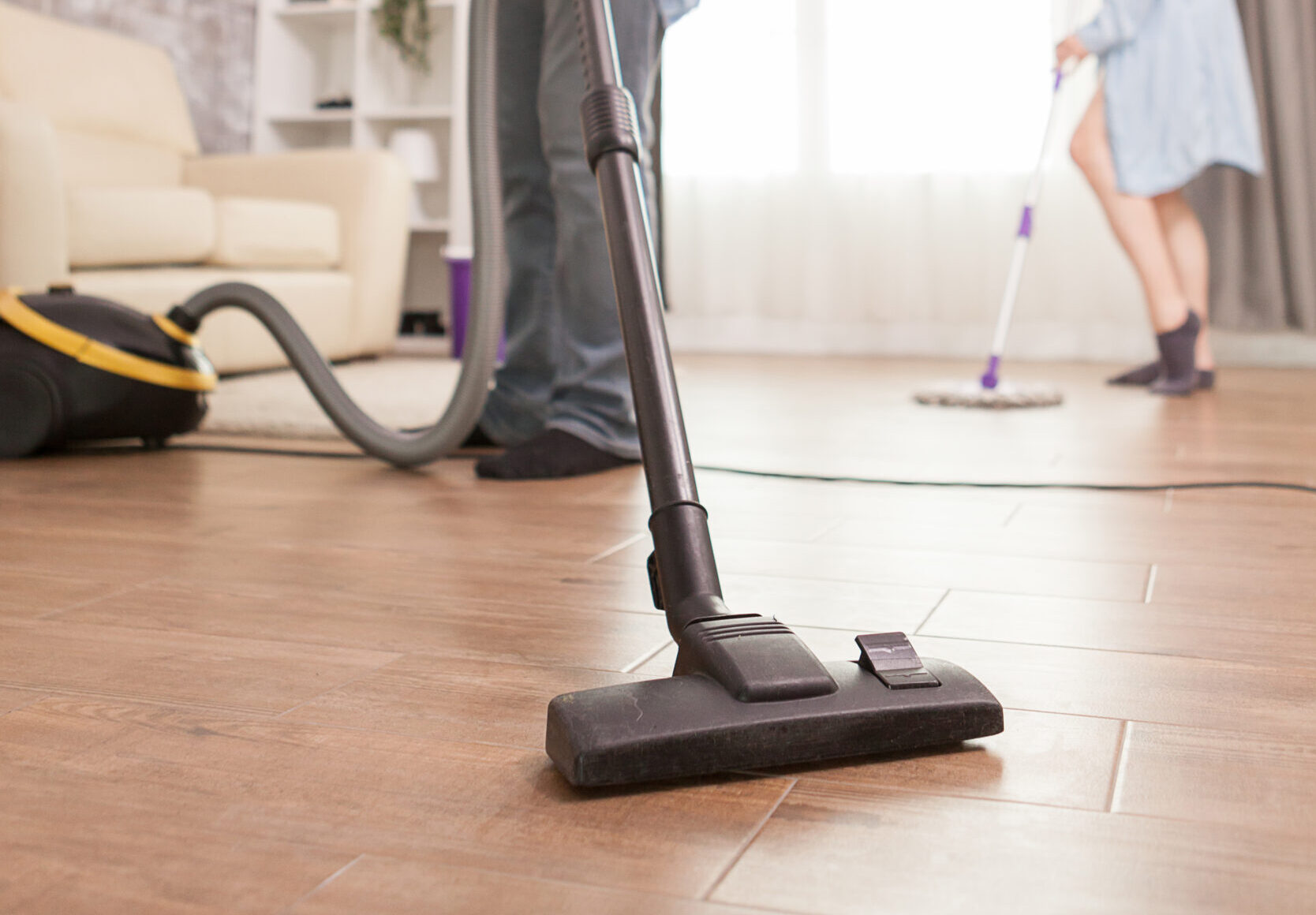
- Vacuuming: Use a vacuum specifically designed for hard surfaces. Ensure the “beater bar” (the rotating brush) is turned off, as stiff bristles can leave fine scratches in the wood’s finish.
- Dust Mopping: A dry microfiber dust mop is excellent for trapping fine pet hair and allergens that vacuums might miss.
Choosing the right mop
The days of the heavy cotton string mop and the rolling bucket are over for hardwood.
- Microfiber Spray Mops: These are the gold standard. They allow you to control exactly how much cleaner is dispensed via a trigger.
- Flat Mops: Using a flat head with a removable microfiber pad allows you to switch to a clean pad frequently, ensuring you aren’t just spreading dirty water around the room.
Proper mopping technique
Always mop with the grain of the wood. This ensures that any residual moisture doesn’t get “trapped” in the texture of the grain. Work in small sections, moving backward toward an exit so you don’t step on the damp areas. For stubborn spots, use a cloth to hand-rub the area rather than applying more liquid.
Products Safe for Hardwood Floors
The chemistry of your cleaner is just as important as the volume of water used.
pH-neutral cleaners
Look for cleaners labeled specifically for “Hardwood Floors” that are pH-neutral. These products are formulated to break down dirt without eating away at the protective wax or polyurethane coating. Many leading American brands offer pre-mixed solutions that require no dilution, which is the safest way to ensure the chemistry is correct.
What to avoid using
- Steam Mops: Despite marketing claims, many flooring manufacturers will void your warranty if you use a steam mop. The high-pressure heat forces moisture deep into the wood fibers.
- Oil Soaps: These often leave a sticky residue that attracts more dirt and makes the floor look dull over time.
- Ammonia or Bleach: These harsh chemicals will strip the finish and discolor the wood.
FAQs
Can you use vinegar on hardwood floors?
While vinegar is a popular natural cleaner, it is not recommended for hardwood. Vinegar is an acid. Over time, the acid breaks down the chemical bonds of the floor’s finish, leading to a dull, lackluster appearance that can only be fixed by professional screening or refinishing.
How often should hardwood floors be mopped?
- High-traffic areas (kitchens and entryways) should be damp-mopped once a week.
- Low-traffic areas (bedrooms or formal dining rooms) only need a damp mop once a month.
- Daily maintenance should be limited to dry sweeping or vacuuming to remove abrasive grit.
Is professional cleaning safer?
Professional cleaners have access to industrial-grade “auto-scrubbers” that apply cleaner and immediately vacuum it back up in one pass. This is the safest way to deep-clean wood because the moisture contact time is less than a second. If your floors look “cloudy” even after cleaning, a professional “screen and coat” may be necessary to restore the luster.
Keep Your Floors Looking Brand New!
Maintaining hardwood doesn’t have to be a chore. With the right microfiber tools and a pH-neutral cleaner, you can preserve the beauty and value of your home for decades.
Is your hardwood losing its shine? Book a professional deep-clean and polish today to bring your floors back to life!