How to Clean Quartz Countertops?
Quartz countertops have become a staple in modern American kitchens, prized for their durability and sleek, stone-like appearance. While quartz is an engineered stone—composed of roughly 90-95% crushed natural quartz and 5-10% polymer resins—it requires a different care logic than granite or marble. To keep your surfaces looking brand new, the key is consistency and gentleness.
Quick Answer: Gentle Cleaners Are Best
The most effective way to clean quartz is with a simple solution of mild dish soap and warm water. Because the resins used to bind the quartz crystals create a non-porous surface, you don’t need heavy-duty chemicals to “deep clean” the stone. In fact, aggressive cleaning agents can permanently dull the finish.
Why quartz doesn’t need harsh chemicals
Unlike natural stones such as granite or soapstone, quartz is non-porous. This means it does not absorb liquids, bacteria, or viruses, making it naturally antimicrobial. Because stains and spills stay on the very surface of the slab rather than soaking in, they can be easily lifted with mild surfactants rather than caustic solvents or acids.
Daily Cleaning for Quartz Countertops
Establishing a daily routine will prevent the buildup of cooking oils and dust that can eventually make the surface look cloudy.
Warm water and mild soap
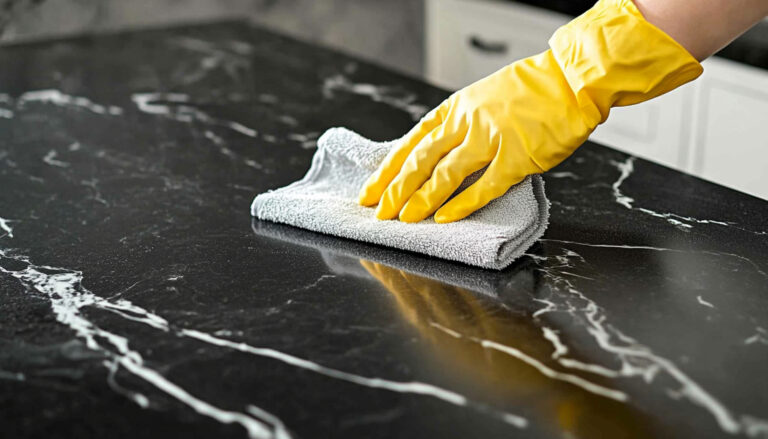
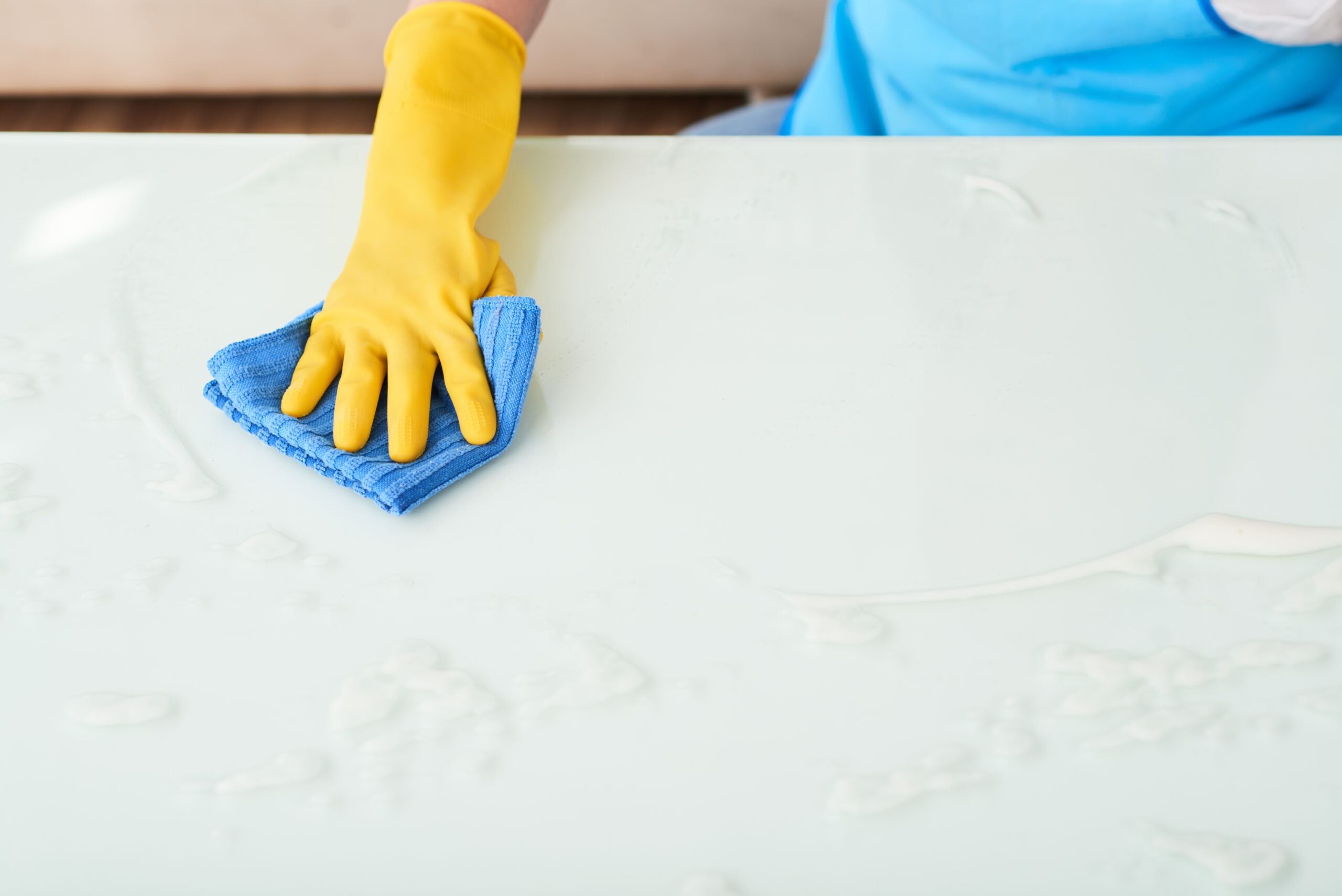
For daily maintenance, use a squirt of pH-balanced dish soap in a bowl of warm water. Dip your cleaning tool, wring it out so it is damp but not dripping, and wipe the entire surface. This is usually enough to remove 99% of daily kitchen messes, including light grease and crumbs.
Soft cloths and sponges
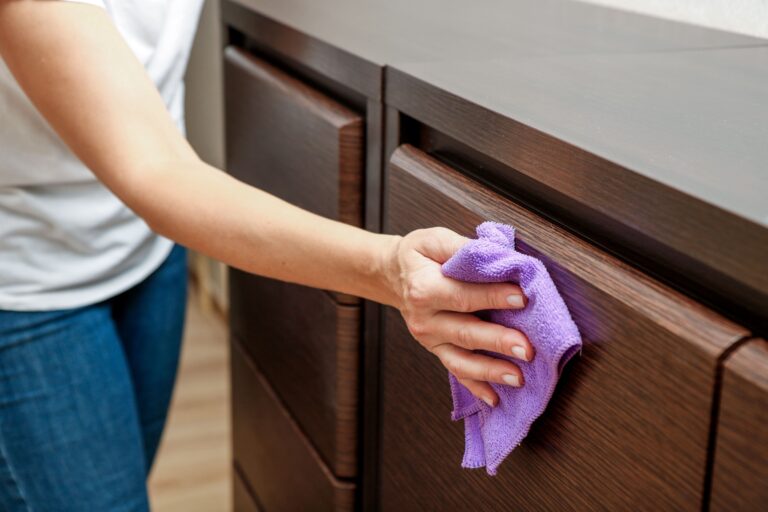
Always use a microfiber cloth or a soft, non-abrasive sponge. Microfiber is particularly effective because it picks up tiny particles without leaving streaks. Avoid the green “scrubby” side of standard sponges, as these can contain aluminum oxide or other minerals that are harder than the resin in your quartz, leading to micro-scratching.
Removing Tough Stains from Quartz
Even though quartz is stain-resistant, it is not “stain-proof.” Certain substances can leave a mark if left to sit too long.
Grease and food residue
For stubborn grease splatters (common near American stovetops), use a degreasing cleaner that does not contain bleach. Many homeowners find that a dedicated “Quartz & Stone” cleaner works well here. Apply the cleaner, let it sit for a minute to break down the oils, and wipe clean with a soft cloth.
Dried spills
If you encounter dried-on food or “caked” spills like honey or tomato sauce, do not use a metal knife to scrape them off. Instead, use a plastic putty knife or a plastic scraper to gently lift the residue. For any remaining “ghost” marks, a damp cloth with a bit of extra soap and a circular motion will usually do the trick.
What Not to Use on Quartz
The resins in quartz are sensitive to high pH levels and physical abrasion. Avoiding these common mistakes will save your countertops from permanent damage.
Abrasive pads
Steel wool, pumice stones, and heavy-duty scouring pads are too aggressive for quartz. They can strip the factory polish, leaving a “hazy” or “matte” patch on an otherwise glossy countertop. Once the polish is physically abraded, it is very difficult to restore it to a perfect match with the rest of the slab.
Bleach and harsh chemicals
Never use bleach, ammonia, or highly acidic cleaners (like concentrated lemon juice) on quartz. High-pH substances can cause a chemical reaction with the resins, leading to permanent discoloration or “blotching.” Similarly, avoid drain cleaners, paint removers, or silver polishes, as these are far too caustic for engineered stone.
FAQs
Can quartz stain?
Yes, quartz can stain, particularly when exposed to permanent markers, hair dye, or concentrated juices for long periods. However, most “stains” on quartz are actually surface “marks” where a substance has reacted with the resin. The faster you wipe up a spill, the lower the risk.
Is vinegar safe for quartz?
While vinegar is a popular natural cleaner in many U.S. households, it is not recommended for frequent use on quartz. The acidity in vinegar can slowly break down the bond between the quartz and the resin over time, leading to a loss of shine. Stick to pH-neutral cleaners instead.
How often should quartz be cleaned?
You should wipe down your countertops daily to remove dust and crumbs. A deeper cleaning with a specialized stone soap can be done once a week to maintain the luster and ensure no film is building up from dish soap residue.
Keep Your Kitchen Sparkling with Jama Cleaning
Your quartz countertops are a significant investment in your home’s value and beauty. Don’t risk damaging them with improper cleaning techniques or the wrong chemicals. At Jama Cleaning, we specialize in high-end surface care. Our professional teams use only pH-neutral, stone-safe products and techniques specifically tailored for engineered quartz. We ensure your kitchen is sanitized and streak-free, allowing the natural brilliance of your home to shine.
Ensure your surfaces get the professional care they deserve—Contact Jama Cleaning today for a customized home cleaning plan!