How to Clean a Glass Top Stove?
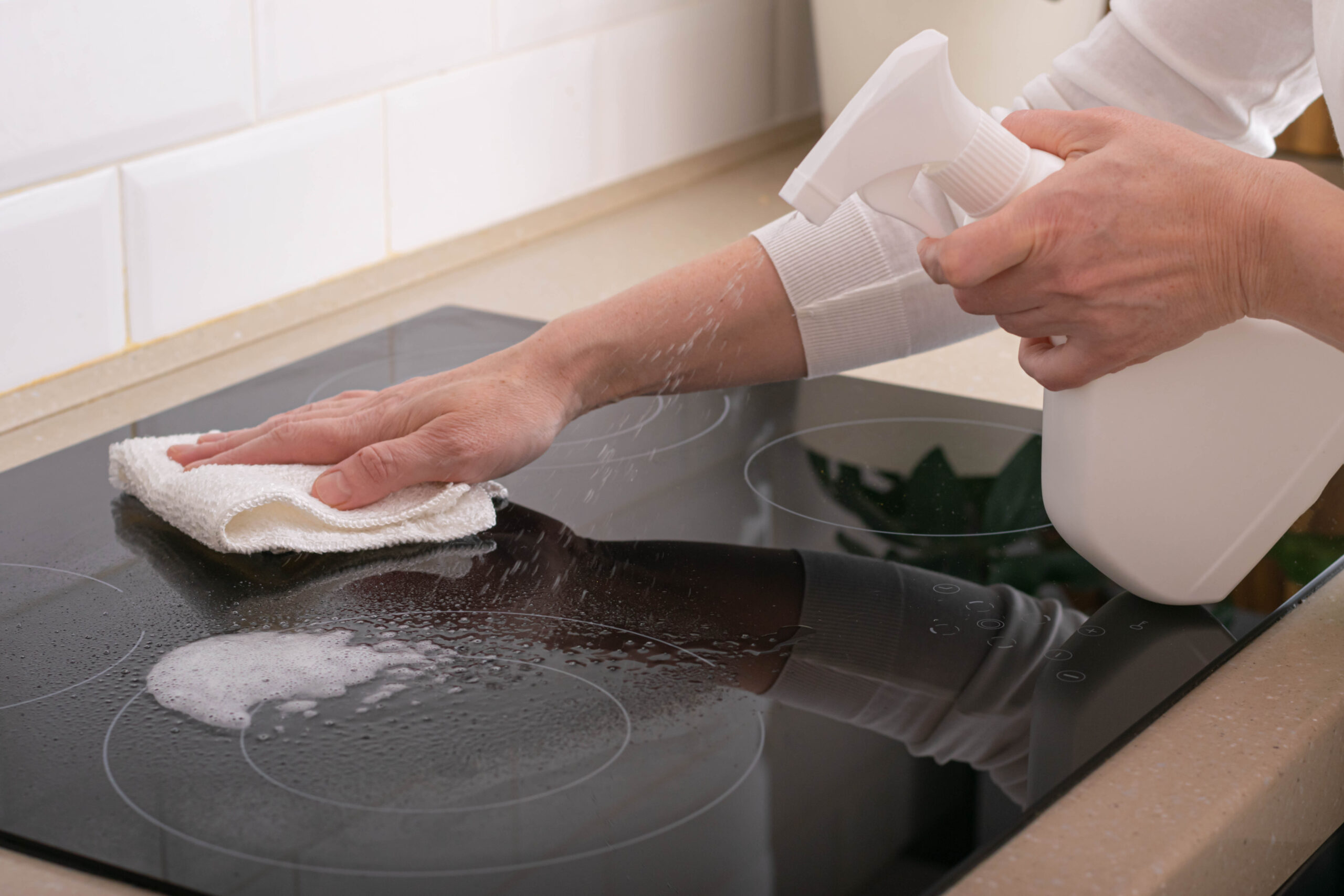
Glass top stoves (radiant or induction) offer a modern, sleek aesthetic, but their surface is notoriously sensitive to spills, scratches, and mineral deposits. Maintaining that high-gloss finish requires a different approach than traditional gas or coil stoves.
Why Glass Top Stoves Need Special Care
A glass cooktop is actually a glass-ceramic blend designed to withstand extreme temperature changes. However, it is highly susceptible to physical and chemical damage.
Scratch and residue risks
Unlike metal grates, glass can be permanently scratched by abrasive sponges, cast iron pans, or even salt crystals dragged across the surface. Furthermore, sugary spills (like jelly or caramel) can bond to the glass fibers when hot, leading to “pitting”—small, permanent craters in the surface—if not cleaned correctly.
Step-by-Step Glass Top Stove Cleaning
For regular maintenance, follow this process to ensure a streak-free shine.
Cooling and prep
Never clean a glass stove while it is hot. Most modern stoves have a “Hot Surface” indicator; wait until this light turns off. Once cool, use a dry microfiber cloth to brush away loose crumbs or salt. Applying liquids to a surface covered in grit can lead to accidental scratches during the scrubbing process.
Cleaning and polishing
- Apply Cleaner: Use a specialized glass-ceramic cleaning cream (like Cerama Bryte or Weiman). These contain mild abrasives that break down grease without scratching the glass.
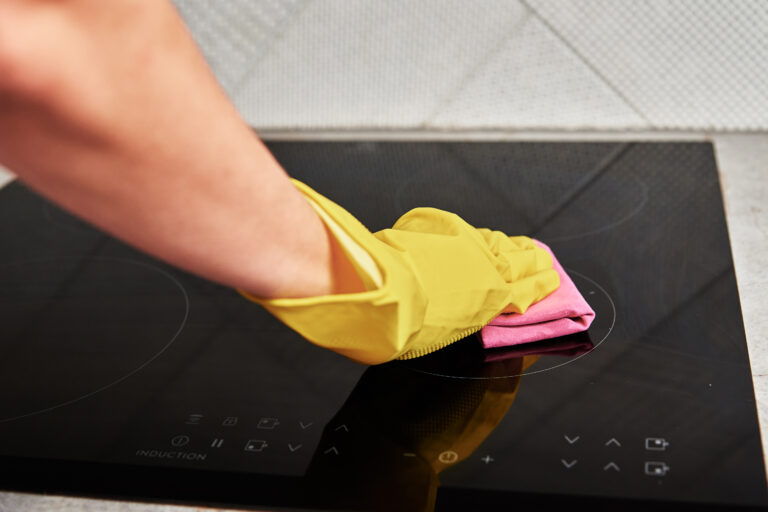
- Buff in Circles: Using a soft, non-abrasive cleaning pad, rub the cream in circular motions across the entire surface.
- Buff Dry: Use a clean, dry microfiber cloth to buff the cream away. This step is what creates the reflective, streak-free polish.
Removing Burnt Residue Safely
When food is “cooked on” to the glass, standard wiping won’t be enough. You need to break the bond between the residue and the ceramic.
Approved scraping tools
The only tool recommended for heavy buildup is a specialized glass scraper (a single-edge razor blade in a safety handle).
- The Technique: Hold the blade at a shallow 45-degree angle. Applying even pressure, gently scrape the burnt material. Keep the surface slightly damp with cleaner to provide lubrication for the blade.
- Warning: Never use the corner of the blade or a “sawing” motion, as this will gouge the glass.
Baking soda method
For those who prefer to avoid blades:
- Cover the burnt area with a thick layer of baking soda.
- Spritz with a bit of water or vinegar.
- Place a towel soaked in hot, soapy water over the area.
- Let it sit for 20 minutes to “steam” the residue soft, then wipe away.
FAQs
Can you scratch a glass top stove?
Yes. Aside from abrasive cleaners, the most common cause of scratches is “sliding” heavy cookware. Always lift your pots and pans rather than sliding them across the burners. Additionally, avoid using steel wool or the green side of a yellow sponge.
Are razor blades safe?
Yes, provided they are new and used at the correct angle. A dull or nicked blade can scratch the surface, so always use a fresh, sharp edge. Ensure the glass is lubricated with a cleaning solution or soapy water before scraping.
How do professionals clean glass stoves?
Professional cleaners typically use a three-step process:
- Degreasing: Breaking down the surface oils.
- Mechanical Lifting: Using a scraper for carbonized rings.
- Polishing: Using a high-speed buffing motion with specialized ceramic creams to restore the factory luster and create a protective barrier against future spills.
Keep Your Kitchen Pristine with Jama Cleaning
A cloudy, streaked stove can dull the look of your entire kitchen. At Jama Cleaning, we specialize in the delicate restoration of glass cooktops. Our professionals use industry-standard ceramic creams and precision tools to remove even the toughest burnt-on messes without leaving a single scratch behind.
Let Jama Cleaning restore your stove’s mirror finish today—Book your deep clean now!