How to Clean a Microwave Safely and Effectively?
The microwave is the workhorse of the modern American kitchen. From reheating leftovers to popping movie-night popcorn, it handles a variety of tasks every day. However, because it is an enclosed space that uses high heat, it is prone to rapid messes and stubborn odors that can affect the quality of your food.
Why Microwaves Get Dirty So Fast
It often feels like you just cleaned the microwave only to find a new mess 24 hours later. Understanding the causes can help you prevent future buildup.
Food splatter and steam
When food is heated, the water molecules inside vibrate and turn into steam. If the food is dense or has a skin (like potatoes or tomato sauce), pressure builds up until it “pops,” sending splatters across the ceiling and walls of the appliance. Because the microwave stays hot for several minutes after use, these splatters quickly bake onto the surface, creating a “carbonized” mess that is difficult to wipe away.
Odors and bacteria buildup
Microwaves are humid environments. Every time you heat a liquid, steam coats the interior. If the door is closed immediately after use, that moisture is trapped. Over time, food particles mixed with moisture can become a breeding ground for bacteria and mold. Furthermore, pungent foods like fish or burnt popcorn release oils that stick to the interior walls, causing odors that linger and permeate the next dish you heat up.
How to Clean Inside of a Microwave
You don’t need expensive specialized tools to get a sparkling interior. In fact, the most effective method involves using physics to your advantage.
Steam cleaning method
This is the most popular and “hands-off” way to loosen grime.
- The Solution: Mix 1 cup of water with 1 tablespoon of white vinegar or a few slices of lemon in a microwave-safe glass bowl.
- The Process: Place the bowl inside and run the microwave on high for 3 to 5 minutes, or until the liquid is boiling and the window is completely steamed over.
- The Wait: Crucial Step: Do not open the door immediately. Let it sit for 10 minutes. This allows the steam to penetrate and soften the dried-on food.
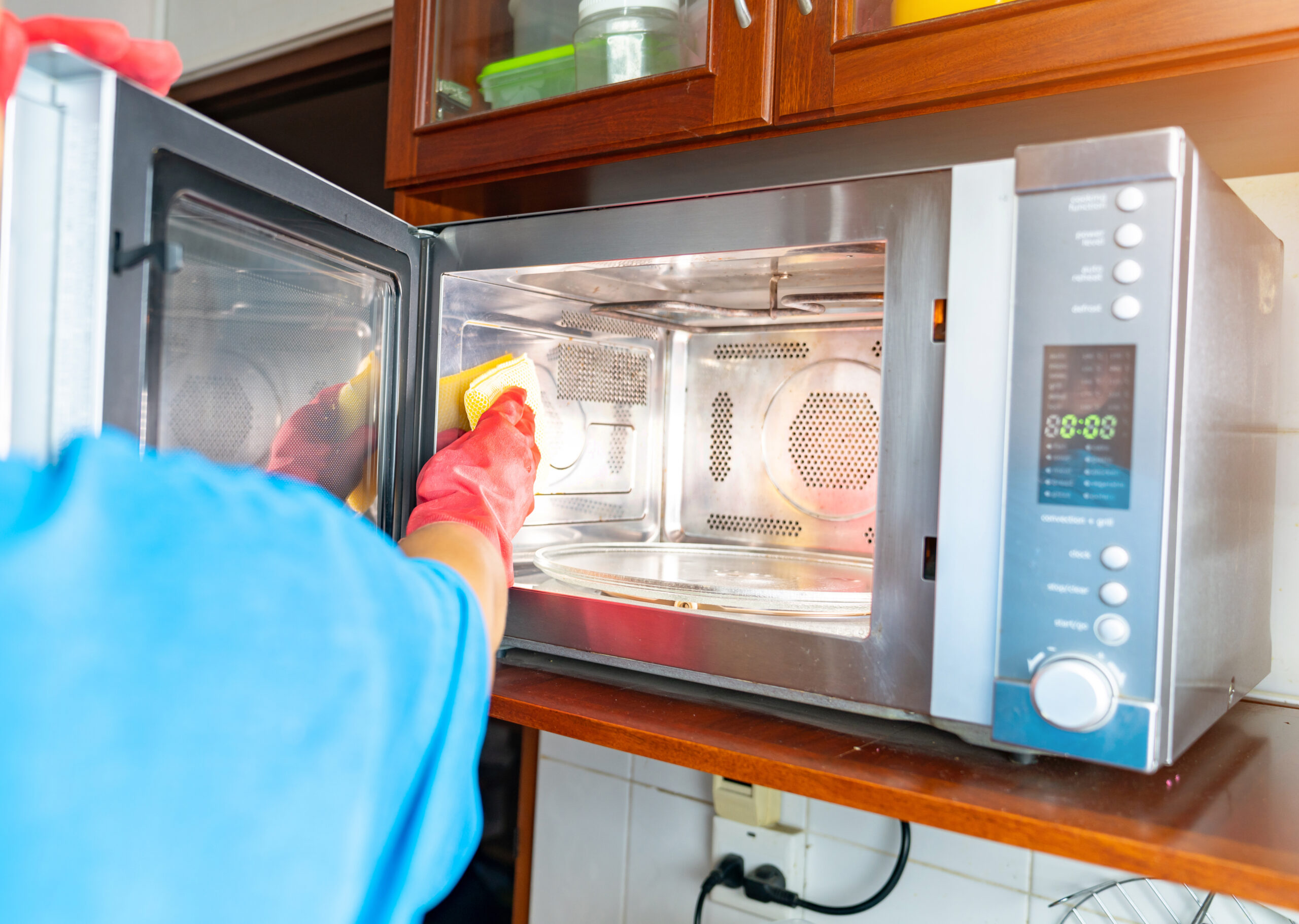
- The Wipe: Carefully remove the bowl (use oven mitts!) and the turntable. Use a damp microfiber cloth to wipe the ceiling, walls, and floor. The grime should slide right off.
Removing stuck-on food
For spots that survived the steam:
- Baking Soda Paste: Mix baking soda and a small amount of water to create a thick paste. Apply it to the stubborn spot and let it sit for 5 minutes.
- Gentle Scrub: Use a damp cloth to scrub in a circular motion. The mild abrasiveness of the baking soda will lift the food without scratching the plastic or enamel coating.
How to Clean the Outside of a Microwave
The exterior of your microwave is a high-touch surface that collects grease, dust, and fingerprints.
Control panel and handle
The keypad is one of the germiest places in a kitchen.
- Avoid Direct Spray: Never spray cleaning liquid directly onto the control panel, as it can seep behind the buttons and short out the electronics.
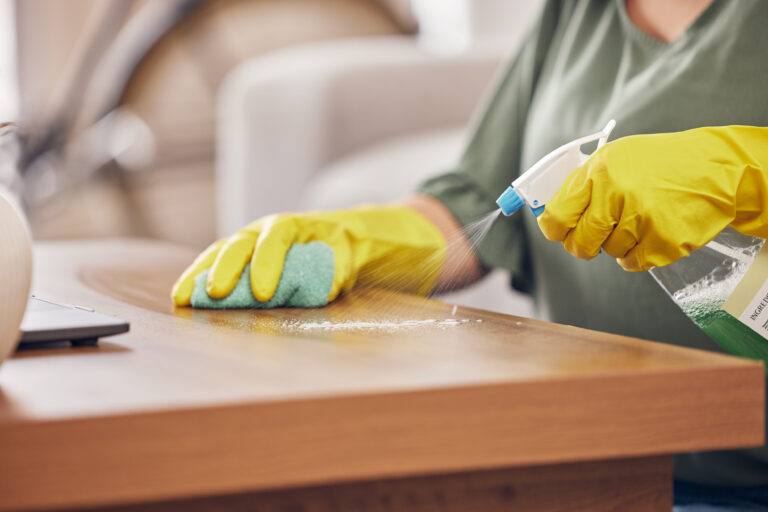
- The Technique: Spray a cloth with an all-purpose cleaner or a 50/50 water-vinegar mix, then wipe the buttons and handle. Dry immediately with a fresh cloth to prevent streaks.
Stainless steel tips
If your microwave is stainless steel, it requires specific care to maintain its luster.
- Grain Direction: Always wipe in the direction of the metal’s grain.
- Polishing: Use a tiny drop of olive oil or a dedicated stainless steel spray on a microfiber cloth to remove fingerprints and add a protective shine.
What Not to Use
Using the wrong tools can permanently damage the appliance’s reflective interior or the exterior finish.
Abrasive sponges
Never use steel wool, scouring pads, or highly abrasive “green” sponges inside the microwave. These can create microscopic scratches in the lining. Once the lining is scratched, food sticks even more easily, and in extreme cases, it can lead to “arcing” (sparking) during use.
Harsh chemicals
Avoid using bleach or oven cleaners inside a microwave. These chemicals are far too caustic for the materials used in microwaves. Furthermore, if the chemicals aren’t rinsed perfectly, the fumes can be released into your food the next time you heat something up.
FAQs
How often should you clean a microwave?
For a typical American household, a deep steam clean should be done once a week. However, “spot cleaning”—wiping up a visible splatter immediately—should be done after every use to prevent the food from baking on.
Is vinegar safe to use?
Yes, distilled white vinegar is one of the safest and most effective natural cleaners for microwaves. It cuts through grease and kills many common household germs without leaving toxic residues.
Can professionals clean appliances?
Absolutely. Most professional residential cleaning services include microwave cleaning as part of a standard kitchen service. For deep cleans, professionals can also clean the underside (if it’s an over-the-range model) and the grease filters located underneath.
Ready for a Sparkling Kitchen?
Maintaining a clean kitchen is a full-time job, but you don’t have to do it alone. Whether you need a one-time deep clean or a recurring maintenance schedule to keep your appliances in top shape, our professional team is here to help.
Contact us today for a free quote on your next home cleaning!