Best Way to Clean a Kitchen Floor
The kitchen is the heart of the home, but it is also the highest-traffic zone and the primary target for food spills, moisture, and airborne grease. Unlike other rooms, a “clean” kitchen floor isn’t just about removing dust; it’s about breaking down organic fats and preventing long-term structural damage.
Quick Answer: The Best Method Depends on the Floor Type and How You Handle Grease
There is no “one-size-fits-all” solution for kitchen floors. While a degreaser is essential near the stove, that same chemical might strip the finish off a hardwood floor. Successful cleaning requires a balance: using enough chemistry to cut through grease, but enough caution to protect the floor’s integrity.
Why “too much water” ruins many floors
The most common mistake in kitchen cleaning is “flooding” the floor. Excess water seeps into the seams of laminate, vinyl planks, and hardwood, causing the edges to swell, warp, or “cup.” Even on tile, over-saturation can lead to mold growth in the subfloor if the grout has tiny cracks.
Best Cleaning Method by Floor Type
Tile: degrease + rinse
Ceramic and porcelain are the most durable options.
- The Method: Use a heavy-duty alkaline cleaner (degreaser) to break down cooking oils.
- The Key: You must perform a “fresh water rinse” afterward. If you don’t, the degreaser dries into a sticky film that actually traps new dirt faster.
Vinyl: gentle cleaner + minimal water
Luxury Vinyl Plank (LVP) and sheet vinyl are waterproof on the surface, but vulnerable at the seams.
- The Method: Use a pH-neutral cleaner or a dedicated vinyl floor solution.
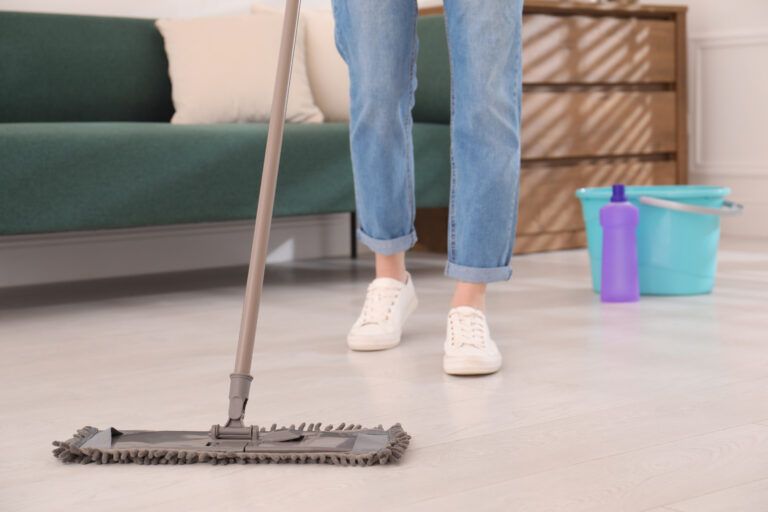
- The Key: Use a damp mop, never a dripping wet one. Microfiber spray mops are ideal here because they control the volume of liquid perfectly.
Hardwood: dry clean + damp mop only
Kitchen hardwood requires the most discipline.
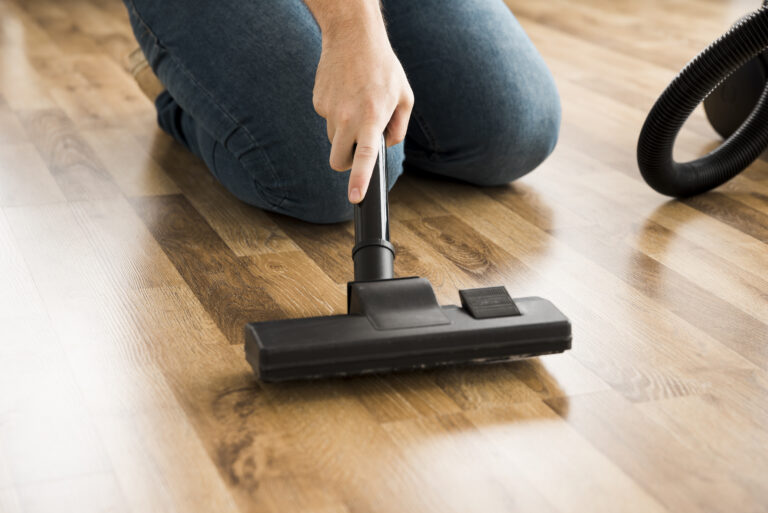
- The Method: Always start with a dry microfiber dust mop or a vacuum (hard floor setting) to remove grit that can scratch the finish.
- The Key: Use a barely-damp mop with a specialist wood cleaner. Never use steam mops on hardwood, as the pressurized heat can peel the finish and force moisture into the grain.
Removing Kitchen Grease from Floors
Kitchen grease is “sticky” dirt. If you don’t remove the oil, you are simply moving the dirt around.
Degreaser choices and safe dilution
- Commercial Degreasers: Look for “alkaline” cleaners. Always follow the dilution ratio on the bottle; more is not better and can damage floor finishes.
- Natural Alternative: A few drops of grease-cutting dish soap (like Dawn) in a gallon of warm water is surprisingly effective for daily grease management.
Spot-cleaning near stove and trash areas
The 2-foot radius around your stove and under the trash can are “hot zones.” Instead of mopping the whole floor more often, keep a spray bottle of degreaser and a microfiber cloth handy. Spot-cleaning these areas daily prevents grease from being tracked across the rest of the house.
Kitchen Floor Maintenance Schedule
- Daily: Sweep or vacuum high-traffic paths. This prevents crumbs from being crushed into the floor.
- Weekly: A full damp mop with the appropriate cleaner for your floor type.
- Quarterly: Deep clean the edges and baseboards where grease-heavy dust tends to settle.
FAQs
Is vinegar safe on kitchen floors?
It depends. Vinegar is acidic. It is safe for most ceramic tiles, but it can dull the finish on hardwood and slowly “etch” or pit natural stone (like marble or limestone). It can also weaken grout over many years of use.
What’s the best mop for greasy floors?
A microfiber flat mop with removable pads is superior to a string mop. String mops hold onto grease and redistribute it. With a flat mop, you can swap the pad for a clean one mid-job, ensuring you are actually removing the grease from the home.
How do I prevent sticky residue?
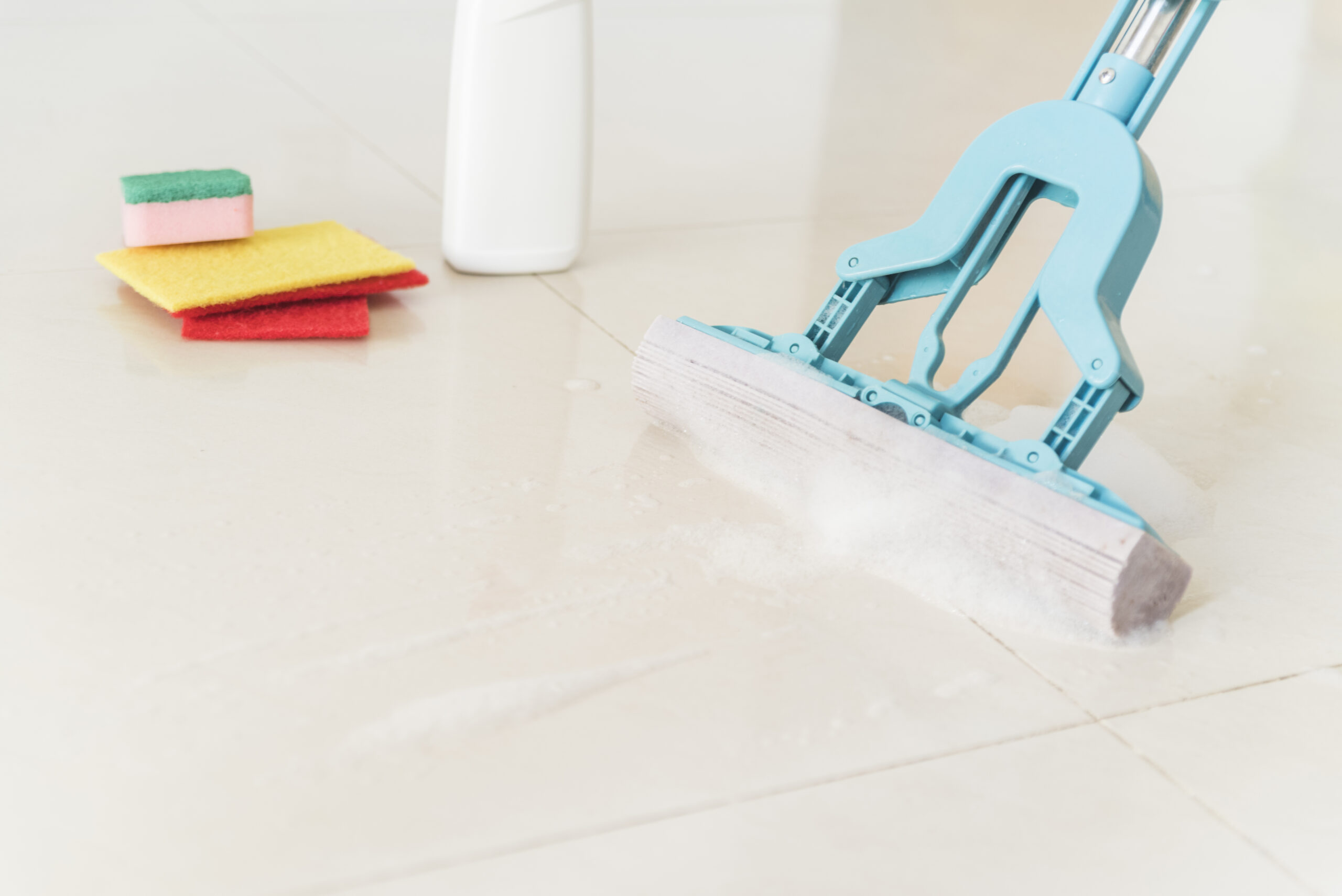
Sticky floors are almost always caused by using too much cleaning product or failing to rinse. If your floor feels tacky, mop it once with nothing but plain, hot water to “strip” the excess soap away.
Struggling with a floor that never feels truly clean? Let the experts at Jama Cleaning handle the heavy lifting. Our team uses professional-grade, floor-safe degreasers and high-efficiency equipment to restore your kitchen floor to its original shine. From deep-cleaning grout to revitalizing hardwood, we make your kitchen a place you’re proud to show off. Call Jama Cleaning for a free estimate today!