How to Clean Old Wood Furniture?
Old wood furniture carries a history and character that modern pieces often lack. However, the finishes on these antiques—whether shellac, lacquer, or wax—can become brittle or clouded over time, requiring a specialized touch to clean without causing damage.
Quick Answer: Gentle Cleaning Preserves Antique Finishes
The primary rule for antique wood is minimalism. The less moisture and chemical interference you use, the better. Start with the gentlest method possible and only increase the “strength” of your cleaning if the grime persists.
Why old wood is more delicate
Unlike modern polyurethane finishes that act like a plastic shield, older finishes are often organic. Over decades, wood loses moisture and can shrink or crack. Harsh chemicals can strip away these thin protective layers, exposing the raw wood to rot, warping, and permanent staining.
Safe Cleaning Methods for Old Furniture
Dry dusting techniques
Dust is actually abrasive; it consists of tiny particles that can scratch a finish if dragged across the surface.
- The Method: Always use a soft, lint-free cloth (like an old cotton T-shirt or a microfiber cloth).
- The Tip: Avoid “feather” dusters, which can have sharp quills that scratch. Lightly dampen the cloth with a tiny amount of water or a dedicated dusting spray so the dust clings to the cloth rather than being pushed around.
Mild soap and minimal moisture
If the wood is visibly dirty, a “dry” clean won’t be enough.
- Solution: Mix a few drops of mild dish soap into a bowl of warm water.
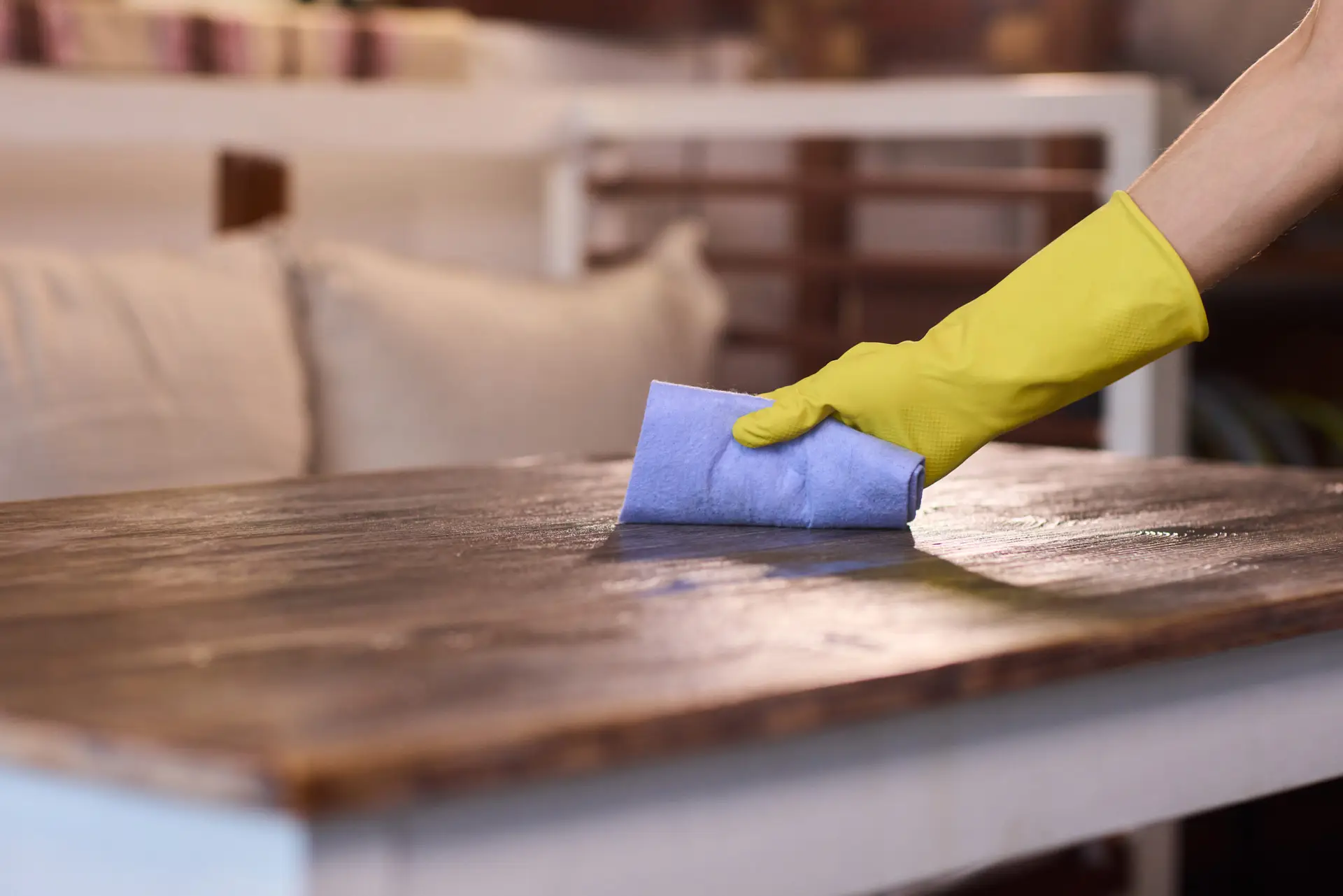
- Damp, Not Wet: Dip your cloth and wring it out until it is barely damp. You should never see standing water on the wood.
- Wipe and Dry: Wipe a small section in the direction of the wood grain, then immediately follow with a dry cloth to remove any residual moisture.
Removing Grime and Buildup
Sticky residue and wax buildup
Years of commercial aerosol polishes can create a thick, “smeary” layer of wax and silicone that traps dirt.
- Mineral Spirits: For heavy, sticky buildup, test a small, inconspicuous area with a cloth dampened with mineral spirits (paint thinner). It is excellent for dissolving old wax without harming most traditional finishes.
- Warning: Use in a well-ventilated area and wear gloves.
Avoiding abrasive products
Never use “magic erasers,” steel wool, or scouring pads on antique wood. These products work by sanding away the top layer of the finish. Even if the grime is gone, you will be left with a dull, flat spot that ruins the item’s patina and value.
Protecting and Maintaining Old Wood
When to polish or wax
- Paste Wax: This is the gold standard for antiques. A high-quality carnauba-based paste wax provides a hard, thin protective layer that lasts for a year or more.
- Avoid Silicones: Most “grocery store” spray polishes contain silicone, which creates a temporary shine but leaves a film that is difficult to remove and can interfere with future refinishing.
Long-term care tips
- Climate Control: Keep antiques away from direct sunlight (which bleaches wood) and heat vents (which causes the wood to shrink and joints to loosen).
- Humidity: Aim for a stable humidity level of 40–50% to prevent the wood from “working” or moving excessively.
FAQs
Is vinegar safe for antique furniture?
Proceed with caution. While vinegar is a popular natural cleaner, it is an acid. If the finish is already thin or cracked, the acid can penetrate the wood and cause discoloration. Always dilute it heavily and test it first, but mild soap is generally safer.
Can old wood be refinished after cleaning?
Yes, but cleaning is often enough to restore beauty. In the world of antiques, the original finish (even with some wear) is often more valuable than a brand-new “factory” look. If the wood is still dull after cleaning, try a coat of paste wax before deciding to strip and refinish.
Do professionals clean antique furniture?
Yes. Professional conservators use specialized solvents and techniques to remove centuries of soot and grime without touching the original stain. If you have a high-value heirloom or a piece with delicate “inlay” or “marquetry,” it is best to consult a pro.
Preserve the legacy of your home with the right care. If your antiques have lost their luster or suffered years of neglect, our restoration experts are here to help. We specialize in traditional hand-waxing and gentle conservation techniques that honor the age and beauty of your wood pieces. Contact us for a professional assessment and let us bring your history back to life.