Cleaning a Fridge With Baking Soda
In many American households, the refrigerator is the focal point of the kitchen. Keeping it clean isn’t just about organization; it’s about food safety and air quality. While there are many chemical cleaners on the market, baking soda remains the gold standard for maintaining a fresh, residue-free environment for your groceries.
Quick Answer: Baking Soda Cleans and Neutralizes Odors
Baking soda (sodium bicarbonate) is a mild abrasive and a natural deodorizer. Unlike soaps that may leave behind floral or chemical scents that can “taint” your food, baking soda physically lifts stains and chemically neutralizes acidic and basic odor molecules, leaving your fridge truly scent-neutral.
Why baking soda works so well in refrigerators
Most “fridge smells” are caused by acidic food particles (like sour milk) or basic compounds. Because baking soda is amphoteric—meaning it can react as both an acid and a base—it brings these pH levels to a neutral state. Additionally, its crystal structure provides enough grit to scrub away dried-on spills without scratching the plastic or glass surfaces of your appliance.
What You Need to Clean a Fridge With Baking Soda
Before you begin, gather these simple supplies to ensure an efficient cleaning process:
Baking soda and warm water
The ideal ratio for a general cleaning solution is two tablespoons of baking soda per one quart of warm water. For stubborn, stuck-on messes, you can create a “cleaning paste” by mixing three parts baking soda with one part water.
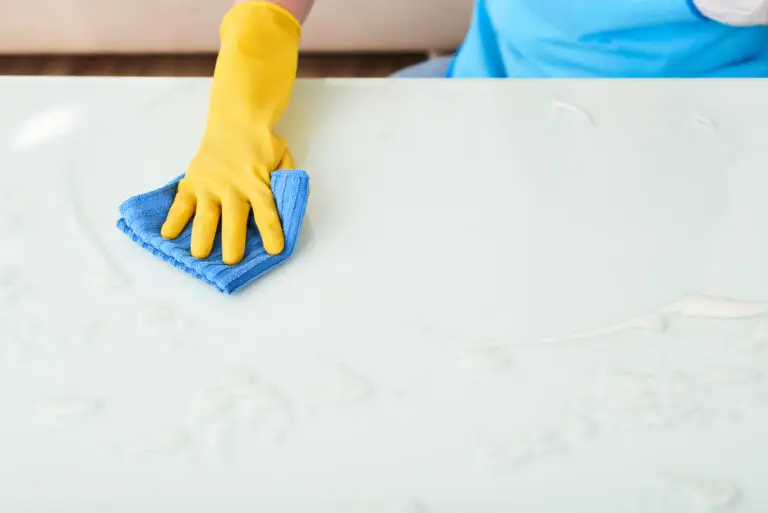
Sponges and microfiber cloths
A soft sponge is perfect for applying the solution, while a microfiber cloth is essential for the final wipe-down. Microfiber is preferred in American kitchens because it leaves a streak-free finish on glass shelves and doesn’t leave lint behind.
Step-by-Step: How to Clean Your Fridge
1. Remove food and shelves
Start by emptying the refrigerator completely. In the U.S., it is recommended to keep perishables at room temperature for no more than two hours, so work efficiently or use a cooler. Remove all glass inserts, crisper drawers, and egg trays.
2. Clean interior surfaces
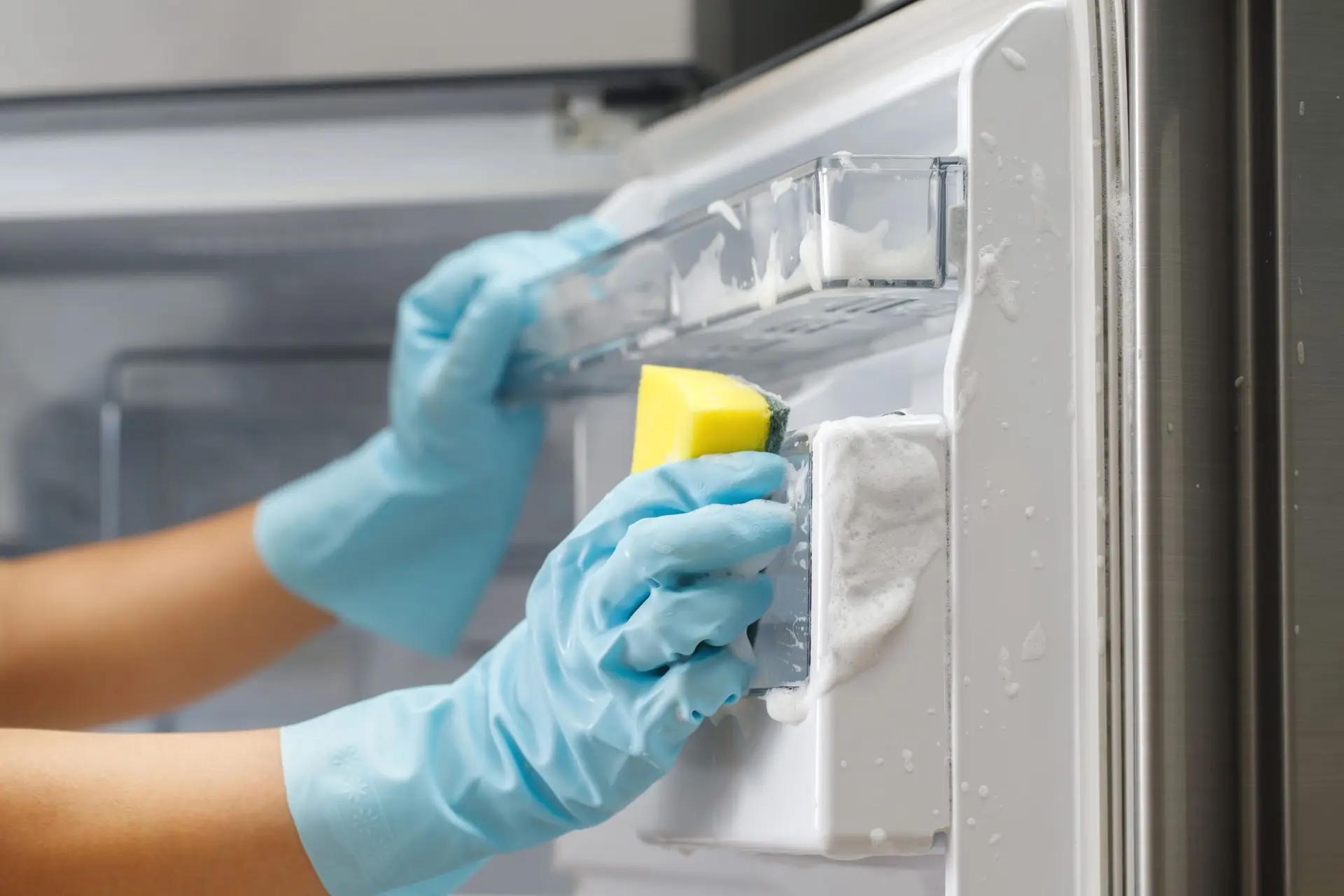
Dip your sponge into the baking soda solution and wipe the ceiling, walls, and floor of the unit. Start from the top and work your way down. For crusty spills, apply the baking soda paste and let it sit for five minutes before scrubbing.
3. Wash shelves and drawers
Do not wash cold glass shelves with hot water immediately, as they may crack (thermal shock). Let them reach room temperature, then wash them in the sink using the baking soda solution. Rinse with clear water and dry thoroughly.
Door seals and hidden areas
Pay special attention to the rubber door gaskets. Dip a cloth in the baking soda water and wipe inside every fold. If the seal feels dry or brittle, this is a good time to check if it needs replacing to maintain energy efficiency.
Removing Strong Refrigerator Odors
Baking soda deodorizing methods
Once the fridge is clean, you can prevent future smells:
- The Open Box Method: Place a fresh, open box of baking soda in the back of the fridge.
- The Shallow Dish Method: For faster results, spread baking soda on a shallow plate to increase the surface area exposed to the air.
- Replacement Cycle: In a standard American household, you should replace the deodorizing box every 30 days.
When odors won’t go away
If a baking soda scrub doesn’t fix the problem, the odor may have penetrated the cooling system’s internal vents or the drip pan. In these cases, a more intensive deep clean or a professional inspection of the defrost system may be required.
FAQs
Is baking soda safe for food areas?
Absolutely. Baking soda is a food-grade product. Unlike bleach or ammonia-based cleaners, if a small amount of baking soda residue comes into contact with your food, it is completely non-toxic.
How often should I clean my fridge?
A deep clean with baking soda should be performed every three to four months. However, you should wipe down spills immediately and check for expired items weekly before your grocery run.
Does baking soda kill bacteria?
Baking soda is a great cleaner, but it is not a registered disinfectant. While it helps remove the grime where bacteria grow, it does not kill germs like salmonella or E. coli. For true disinfection, a diluted bleach solution or a food-safe sanitizer should be used after the baking soda cleaning.
Maintaining a pristine refrigerator is a cornerstone of a healthy home, but finding the time for a deep scrub can be a challenge. At Jama Cleaning, we specialize in high-standard kitchen sanitation that goes beyond the surface. Our team uses food-safe techniques to ensure your appliances are not only sparkling but also free of the hidden bacteria and odors that can compromise your meals. Let us handle the heavy lifting so you can enjoy a fresh, organized kitchen. Contact Jama Cleaning today to schedule your professional kitchen deep clean.