What Cleans Stainless Steel Sinks?
Stainless steel is the gold standard for American kitchens because of its durability and heat resistance. However, “stainless” does not mean “stain-proof.” Without the right maintenance, these sinks can lose their luster, develop unsightly water spots, or even show signs of surface rust.
Quick Answer: Gentle Abrasives + Drying Prevent Most Problems
The secret to a showroom-shine isn’t a miracle chemical; it is the combination of a gentle abrasive to lift grime and immediate drying to prevent mineral buildup. Because stainless steel is a relatively soft metal, avoiding harsh scratches is the most important part of the process.
Why water spots happen and why drying matters
In many parts of the U.S., tap water contains high levels of calcium and magnesium (hard water). When water evaporates off the surface of your sink, it leaves these minerals behind as white, cloudy spots. Over time, these minerals bond to the steel. Drying your sink with a microfiber cloth after every use is the single most effective way to keep it looking new.
Best Cleaners for Stainless Steel Sinks
Baking soda paste for grime and stains
Baking soda is the “holy grail” for stainless steel. It is abrasive enough to scrub away stuck-on food and grease but soft enough that it will not scratch the finish.
- How to use: Sprinkle baking soda over the damp sink and scrub with a soft sponge. It naturally deodorizes the drain while it cleans.
Bar Keepers Friend for hard water and rust spots
For tougher issues like “flash rust” (usually caused by leaving a cast iron pan in the sink) or heavy mineral scales, Bar Keepers Friend is the industry favorite. It contains oxalic acid, which chemically breaks down rust and lime scale without the need for heavy scrubbing.
Vinegar for mineral deposits (use correctly)
Distilled white vinegar is excellent for dissolving the “fog” of hard water. However, never soak the sink in straight vinegar for long periods, as the acidity can eventually dull the finish. Use a 1:1 water-to-vinegar spray for a quick shine.
Step-by-Step: Clean and Restore Shine
1. Clean out debris
Remove all dishes and food scraps. Rinse the sink thoroughly with warm water to remove loose grit that could cause scratches during the scrubbing process.
2. Scrub with the grain (non-scratch tools)
Most stainless steel sinks have a “grain”—a direction in which the metal was brushed during manufacturing.
- The Rule: Always scrub in the direction of the grain, never in circles.
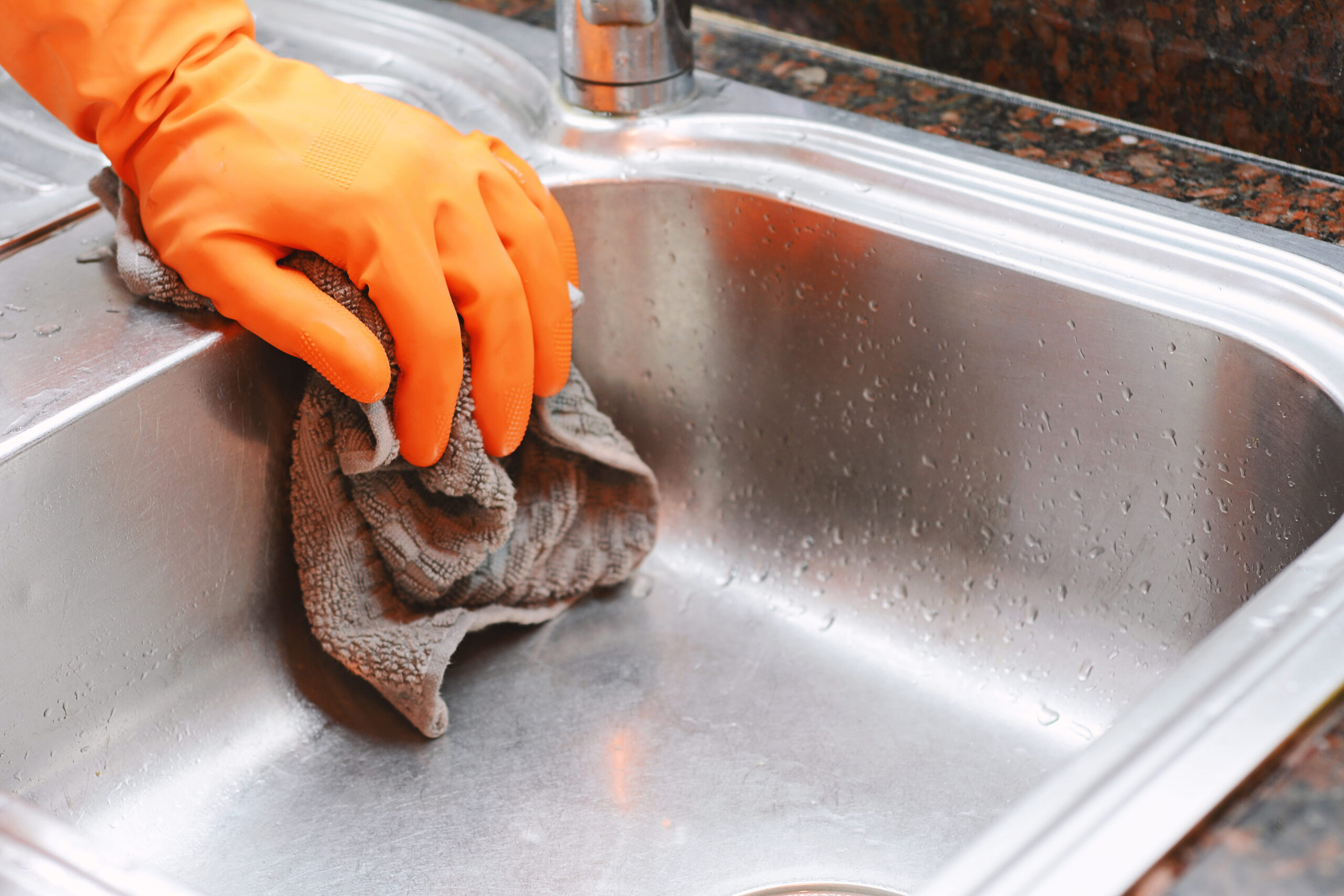
- The Tools: Use a soft sponge, a microfiber cloth, or a non-scratch nylon pad. Never use green heavy-duty scouring pads, as they often contain minerals hard enough to scratch steel.
3. Rinse, dry, and buff
Rinse away all cleaning residue. Use a clean, dry towel to wipe the sink until it is bone-dry. For an extra “pop” of shine, you can apply a single drop of olive oil or mineral oil to a cloth and buff it into the surface.
What to Avoid
Steel wool and harsh abrasives
Never use steel wool or “Brillo” pads. These pads leave behind tiny particles of carbon steel that will embed in the stainless surface and begin to rust, making it look like your sink is failing when it is actually just the pad residue rusting.
Letting metal items sit in the sink
Leaving wet cast iron, tin cans, or even wet sponges in the sink for long periods causes “galvanic corrosion.” This results in dark rings and rust spots that are difficult to remove. Always clear and dry the sink before bed.
FAQs
Why does my stainless sink look dull?
Dullness is usually caused by a “biofilm” of soap scum and grease mixed with hard water minerals. A thorough scrub with baking soda followed by a vinegar rinse will usually strip this layer away and restore the original finish.
How do I remove rust spots?
Rust spots are usually “topical,” meaning they are sitting on the steel rather than eating through it. A paste of Bar Keepers Friend left on the spot for one minute (no longer!) and then scrubbed gently with the grain will usually lift the rust immediately.
Can I use vinegar and baking soda safely?
Yes, but don’t mix them together in a bowl first. The “fizzing” reaction looks cool but actually neutralizes the cleaning power of both. Use baking soda to scrub first, rinse, and then use vinegar as a final rinse to cut through any remaining film.
A clean, shining sink is the centerpiece of a healthy kitchen. At Jama Cleaning, we understand that your home’s surfaces require specialized care to maintain their value and beauty. Whether it’s restoring the luster of your stainless steel or ensuring a sanitized environment for your family, our professional team uses only the safest, most effective techniques. Experience the difference a professional deep clean can make—schedule your service with Jama Cleaning today.