How to Clean Wooden Decking Without a Pressure Washer?
While it is tempting to use a power washer to blast away years of grime, wooden decking is a natural material that requires a gentler touch. Manual cleaning is the best way to extend the life of your deck and maintain the structural integrity of the timber.
Quick Answer: Gentle Scrubbing Preserves Wood Fibers
The most effective and safest method for cleaning wood decks is manual scrubbing with a specialized deck cleaner or mild soap and a soft-bristled brush. This lifts organic growth and dirt without tearing the delicate surface of the wood.
Why pressure washing can damage wood
Wood is composed of soft fibers that can be easily shredded by high-pressure water. Using a pressure washer often leads to “furring” (where the wood becomes fuzzy), splintering, and deep gouges. Furthermore, high pressure can drive moisture deep into the grain, trapped under the surface, which accelerates internal rot and decay.
Best Way to Clean Wood Decks by Hand
Sweeping and debris removal
Start by clearing all items from the deck. Use a stiff outdoor broom to sweep away leaves, twigs, and dirt. Use a putty knife or a thin screwdriver to clear debris from the gaps between boards. This is a critical step; clogged gaps prevent drainage and create “rot pockets” that can destroy your joists.
Mild deck cleaner or soap solution
For general maintenance, a mixture of warm water and a non-ammonia dish soap works well. If the deck has significant staining or graying, use a dedicated wood deck cleaner diluted according to the manufacturer’s instructions. These products are formulated to penetrate the wood grain and lift out deeply embedded oils and tannins.
Scrubbing with soft-bristle brush
Apply your cleaning solution to the deck in small sections. Use a soft-to-medium bristled brush on a long handle to scrub the surface. Always scrub with the grain of the wood. This ensures you are cleaning the “valleys” of the wood texture without breaking the “peaks” of the fibers.
Removing Algae and Dirt from Wood Decks
Oxygen bleach method
If your deck has turned green from algae or black from mildew, reach for oxygen bleach (sodium percarbonate) rather than chlorine bleach.
- Safe for Wood: Oxygen bleach breaks down organic stains without killing the wood’s natural lignin (the “glue” that holds wood fibers together).
- Safe for Plants: It is biodegradable and won’t harm your lawn or garden beds when rinsed off.
Rinsing without oversaturation
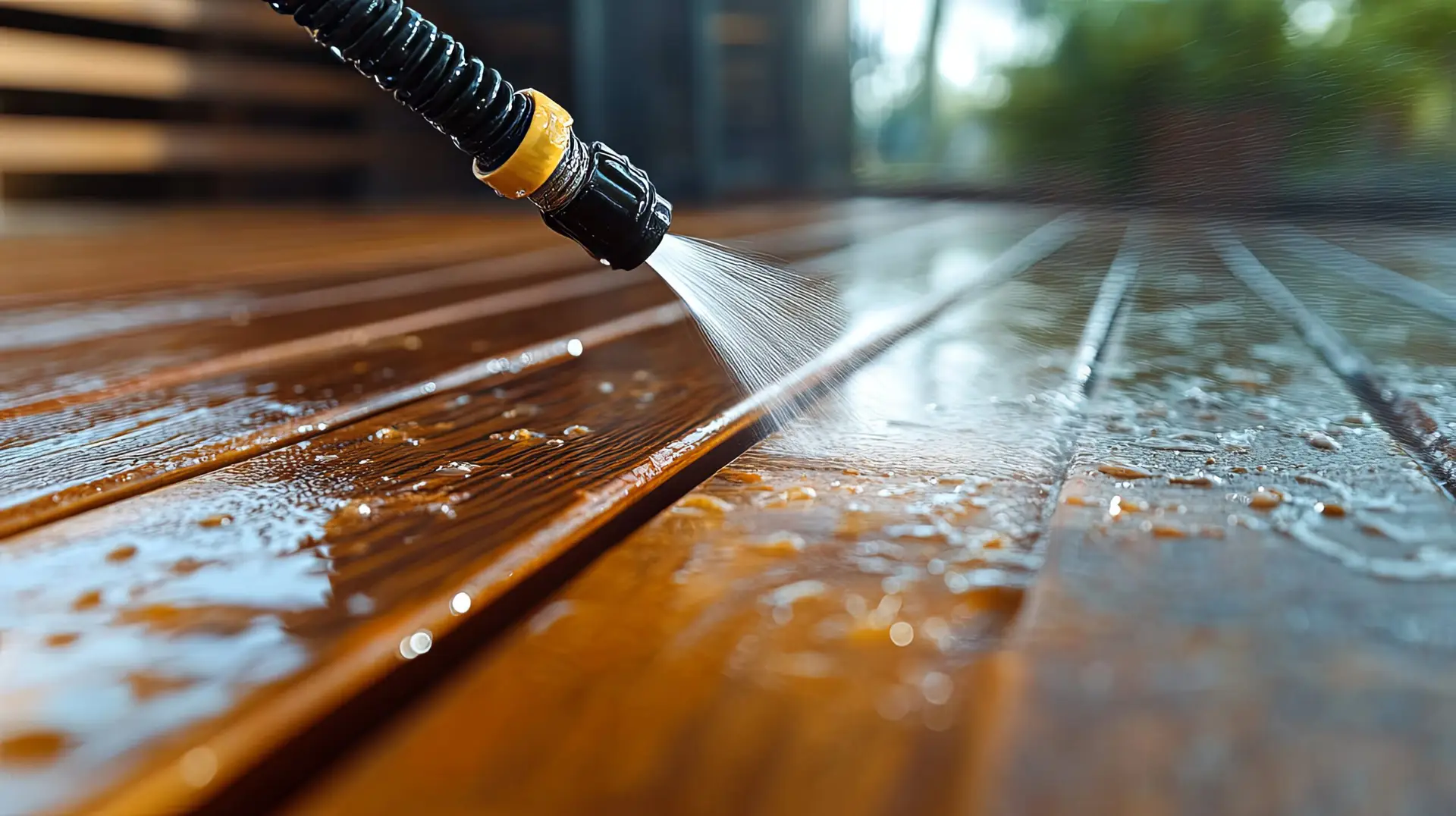
Once you have finished scrubbing, rinse the deck thoroughly with a garden hose using a standard spray nozzle. Aim for a steady flow that washes away the suds. Avoid leaving the wood soaking wet for extended periods; try to clean on a clear, breezy day to facilitate fast drying.
Maintaining Wooden Decks
How often to clean
You should perform a deep manual clean at least once a year, ideally in late spring. However, sweeping should be done weekly to prevent wet leaves from staining the wood.
Sealing and protection tips
Cleaning is only half the battle. Once the deck is completely dry (usually 48 hours after cleaning), apply a high-quality sealer or stain.
- Clear Sealers: Protect against moisture but allow the wood to gray naturally.
- Semi-Transparent Stains: Provide UV protection and moisture resistance while showing the grain.
FAQs
Can vinegar clean wood decks?
Yes, a solution of one part white vinegar to four parts water can be used for light cleaning or to kill small patches of mold. However, it is acidic, so ensure you rinse it off thoroughly to prevent it from reacting with any metal fasteners (screws/nails) in your deck.
How often should wood decking be cleaned?
A thorough “hands-on” wash should be done annually. In damp or shaded areas, a second light cleaning in the autumn may be necessary to prevent algae buildup before winter.
When should deck cleaning be done professionally?
If your deck has years of peeling old stain, heavy wood rot, or widespread black mold, a professional can provide “soft washing” or chemical stripping that safely prepares the wood for restoration without the risks associated with DIY pressure washing.
Protect your investment with the right care. Regular manual cleaning keeps your outdoor space safe and beautiful for decades. If you’re ready to take your deck to the next level, consider a professional sanding and sealing service to restore that “just-installed” glow!