How to Clean a Bathroom Floor?
The bathroom floor is arguably the hardest-working surface in any American home. From damp towels and steam to hair products and everyday foot traffic, it faces a constant barrage of moisture and debris. Maintaining a pristine bathroom floor isn’t just about aesthetics; it is about hygiene and preserving the longevity of your flooring materials.
Quick Answer: Use the Mildest Cleaner That Works and Keep Floors Dry After Showers
The secret to a long-lasting, clean bathroom floor is simplicity. Most homeowners over-rely on harsh disinfectants that can actually strip the finish off tile or stone. Instead, focus on using a pH-neutral cleaner and, most importantly, ensuring the floor is completely dry after use. Moisture is the primary catalyst for mold, mildew, and grout discoloration.
Why moisture control matters more than harsh chemicals
In the humid environment of a bathroom, standing water is the enemy. While “industrial-strength” chemicals might kill bacteria in the short term, they can leave behind a sticky residue that actually attracts more dirt. Excessive moisture can seep into grout lines or under vinyl planks, causing warping or subfloor damage. By controlling humidity and drying spills immediately, you prevent the environment that allows grime to thrive in the first place.
Step-by-Step Bathroom Floor Cleaning
Follow this professional sequence to achieve a streak-free, sanitized finish every time.
Sweep/vacuum first (hair + grit)
Never start with a wet mop. In a bathroom, floors are often covered in hair, lint from towels, and fine dust.
- The Problem: If you apply water to a floor covered in hair, you simply create a “sludge” that is difficult to remove and clogs your mop.
- The Fix: Use a vacuum with a hard-floor setting or a high-quality broom to clear all dry debris. Pay special attention to the corners behind the toilet and under the vanity, where “dust bunnies” tend to congregate.
Mop with the right dilution
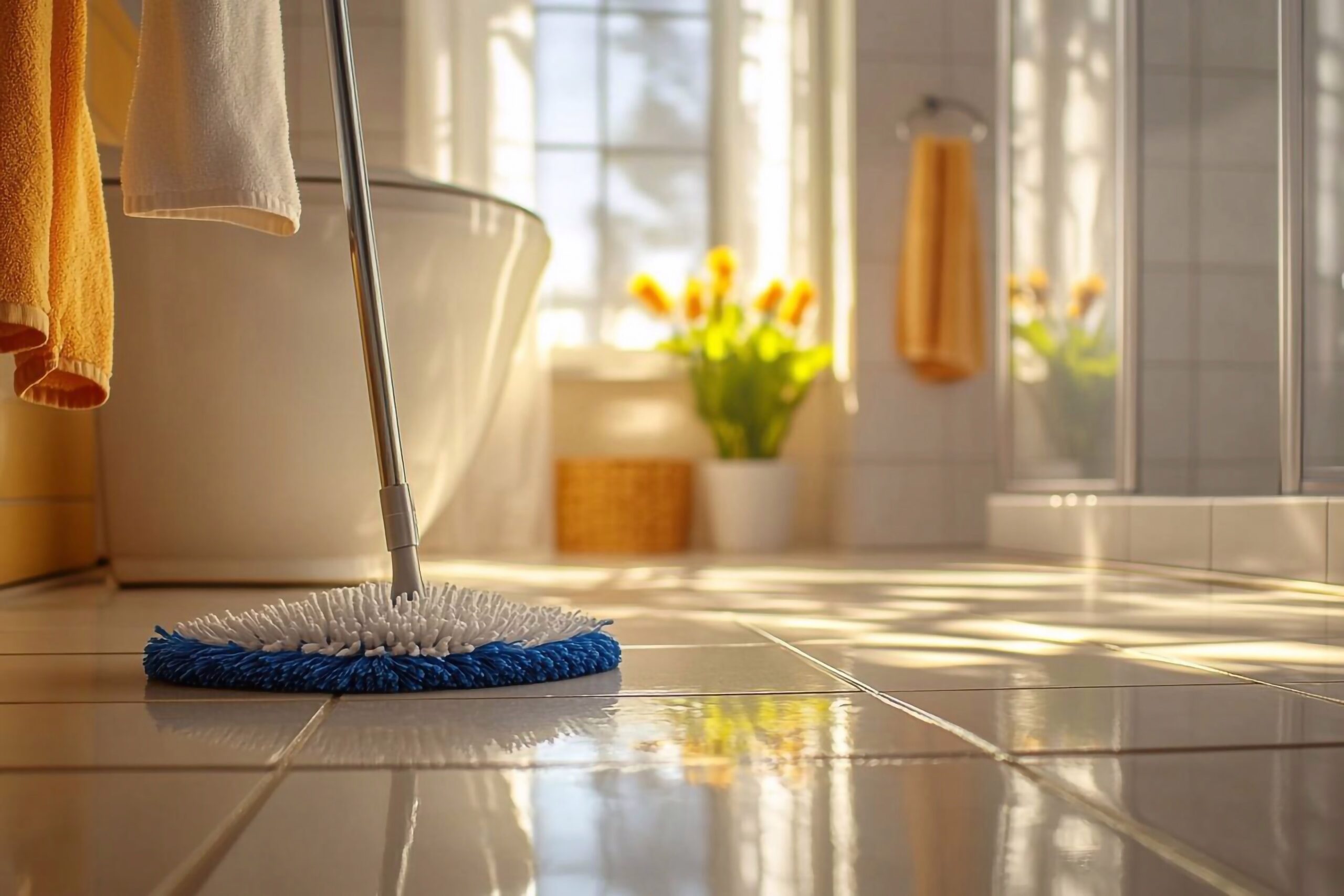
Whether you are using a traditional mop or a microfiber flat mop, the ratio of cleaner to water is vital.
- Mixing: Follow the manufacturer’s instructions on your cleaning solution. Using too much soap won’t make the floor “cleaner”; it will leave a dulling film that makes the floor feel sticky.
- Technique: Mop from the farthest corner of the bathroom toward the door so you don’t “trap” yourself. Change your mop water as soon as it looks cloudy.
Dry the floor to prevent mildew
This is the step most people skip. After mopping, use a clean, dry microfiber cloth or a dedicated floor squeegee to remove excess moisture.
- Safety: This prevents slip-and-fall accidents on slick tile.
- Sanitation: Eliminating standing water ensures that mildew cannot grow in the damp grout lines.
Best Cleaners by Bathroom Floor Type
Different materials require different care protocols to avoid permanent damage.
Vinyl vs ceramic/porcelain tile
- Vinyl (LVP/LVT): These floors are durable but sensitive to high heat and abrasive scrubbers. Use a specialized vinyl cleaner or a drop of mild dish soap in warm water. Avoid “mop and shine” products which can create a waxy buildup.
- Ceramic/Porcelain: These are the most common in US homes. They can handle slightly more acidic cleaners if needed to tackle hard water, but a neutral cleaner is best for daily use.
What to avoid on natural stone
If your bathroom features marble, travertine, or slate, you must be extremely careful.
- No Acid: Avoid vinegar, lemon juice, or any “tub and tile” cleaners that contain acid, as these will “etch” (chemically burn) the surface of the stone.
- No Bleach: Frequent use of bleach can weaken the stone and cause it to look dull.
- The Rule: Use only pH-balanced stone cleaners specifically labeled for natural surfaces.
How to Keep Bathroom Floors Cleaner Longer
Bath mats + ventilation routine
The best way to clean less is to prevent dirt from settling.
- Mats: Place high-absorbency bath mats outside the shower and in front of the sink. Wash these mats weekly to prevent them from becoming a source of odors.
- Ventilation: Always run the bathroom exhaust fan during your shower and for at least 20 minutes afterward. This pulls moisture out of the air before it can settle on the floor.
Weekly maintenance vs monthly deep clean
- Weekly: A quick sweep and a light damp-mop with water or a mild solution.
- Monthly: A more intensive scrub of the grout lines using a soft-bristled brush and a targeted grout cleaner to remove any deep-seated discoloration.
FAQs
Can I use hydrogen peroxide on bathroom floors?
Yes, hydrogen peroxide is an excellent, non-toxic alternative to bleach for brightening grout on ceramic or porcelain tile. However, always test a small, inconspicuous area first and avoid using it on natural stone.
How often should bathroom floors be mopped?
In a high-traffic family bathroom, the floor should be mopped once a week. In a guest bathroom that is rarely used, once every two weeks or once a month is usually sufficient.
What removes sticky residue?
Hairpray and floor-cleaner buildup are common culprits for “sticky” floors. A mixture of warm water and a small amount of rubbing alcohol or a specialized “residue remover” can break down the stickiness without damaging the floor’s finish.
Tired of scrubbing your bathroom on your hands and knees? Let the professionals handle the dirty work! Jama Cleaning offers premium residential cleaning services tailored to the unique needs of your home. From deep-cleaning grout to ensuring a streak-free shine on your hardwood or tile, our team delivers the high-quality results you deserve. Save your weekend and enjoy a spotless home—contact Jama Cleaning today for your free estimate!