What Is the Best Glass Cleaner? (Streak-Free Guide)
Finding the “best” glass cleaner depends on more than just the brand name; it is about the chemistry of the solution and how it interacts with the specific type of grime in your home. Whether you are dealing with outdoor pollen or bathroom hairspray, the right product makes the difference between a five-minute job and an hour of frustration.
Quick Answer: What Makes a Glass Cleaner the Best?
A top-tier glass cleaner is defined by three main characteristics that prevent the dreaded “haze” often seen after a DIY attempt.
Fast Evaporation
The best cleaners contain high-quality solvents (like Isopropyl alcohol) that allow the liquid to evaporate almost instantly. If a cleaner sits on the glass for too long, it traps dust and begins to “pool,” which leads to uneven drying and streaks.
Residue-Free Formula
Many multi-purpose cleaners contain “surfactants” or soaps that leave a microscopic film behind. While this makes your counters look shiny, it makes glass look cloudy. True glass cleaners are formulated to lift dirt and then vanish entirely.
Ammonia vs. Ammonia-Free
- Ammonia-based: Excellent for cutting through heavy grease and grime. However, it has a harsh scent and can damage tinted windows or certain plastics.
- Ammonia-free: Safer for car windows, electronics, and homes with poor ventilation. These are generally the modern standard for residential use.
Best Glass Cleaner for Different Surfaces
Windows
Exterior windows face bird droppings and pollen. A cleaner with a slight “suds” factor—like a drop of dish soap in a vinegar solution—is best to lubricate the dirt so it doesn’t scratch the glass as you wipe.
Mirrors
Mirrors are thin and sensitive to “black edge” (oxidation). Use a fast-evaporating, ammonia-free spray applied to a cloth rather than the mirror itself to protect the silvering.
Shower Doors
Soap scum is a mineral deposit. For these, a cleaner containing citric acid or white vinegar is superior to standard glass cleaners because it chemically dissolves the calcium buildup.
Glass Tables
Since these come into contact with food and hands, look for a non-toxic, streak-free cleaner. Rubbing alcohol-based sprays work well here to disinfect and remove fingerprints simultaneously.
DIY vs. Store-Bought Glass Cleaners
Vinegar Solution Pros and Cons
- Pros: Extremely cheap, non-toxic, and effective at cutting hard water spots.
- Cons: The smell can be off-putting, and it doesn’t evaporate as quickly as alcohol-based commercial sprays, requiring more “elbow grease” to buff out.
When Professional-Grade Cleaners Work Better
Professional cleaners (like Sprayway or specialized concentrates) are often “foaming.” Foam is superior because it stays where you spray it rather than running down the glass into the frames or onto the floor.
Why Glass Looks Worse After Cleaning
If your glass looks “milky” or streaky after you’re done, you are likely falling into one of these common traps:
Cleaning in Direct Sunlight
The sun heats the glass, causing the cleaner to evaporate before you can wipe it away. This “bakes” the cleaning agent onto the surface, creating permanent-looking streaks.
Using Paper Towels
Most American paper towels are treated with “wet strength” resins that can transfer to the glass. Additionally, they are made of wood pulp which leaves behind tiny lint particles.
Overusing Product
If the glass is dripping, you’ve used too much. More liquid doesn’t mean more clean; it just means more work to remove the moisture, increasing the chance of streaks.
FAQs
Is vinegar better than Windex?
Vinegar is better for removing mineral deposits (hard water). Windex (with ammonia) is generally better for cutting through heavy kitchen grease or industrial smog.
What cloth prevents streaks?
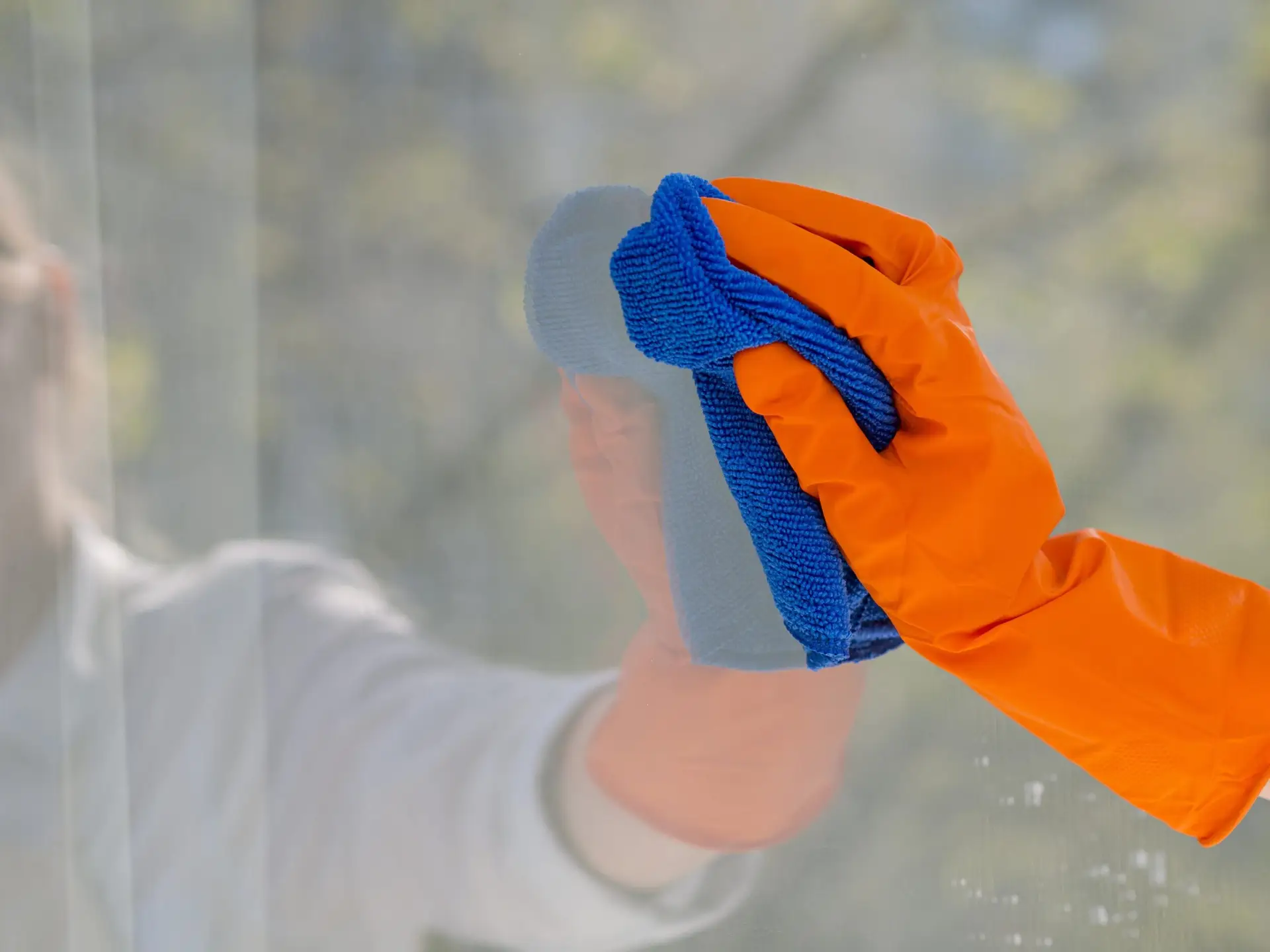
A flat-weave microfiber cloth (often called a “glass cloth”) is the industry standard. It has no “loops” to catch lint and is designed to polish as it wipes.
Can glass cleaner damage surfaces?
Yes. Ammonia can damage wood frames, stone countertops (like marble), and the anti-glare coatings on computer monitors or televisions.
Professional Window & Surface Cleaning in Massachusetts
Maintaining the glass in a large Massachusetts home or a commercial storefront can be a full-time job. Between the salt air of the coast and the seasonal pollen of the Berkshires, glass in the Bay State takes a beating.
At Jama Cleaning, we specialize in professional-grade clarity. We serve residential and commercial clients throughout Massachusetts, using advanced water-fed pole systems and eco-friendly, streak-free solutions that keep your glass cleaner for longer.
Don’t settle for a cloudy view. Contact us today for a free estimate on your next professional cleaning service in Massachusetts!