Best Cleaning Product for Refrigerator
Choosing the right cleaning agent for your refrigerator is vastly different from picking a floor cleaner or a bathroom spray. Since this appliance stores everything your family consumes, the primary concern is the intersection of high-level sanitation and food safety. In the United States, the trend has shifted away from industrial-strength chemicals toward specialized, food-safe formulations that protect both the appliance and the consumer.
Quick Answer: Food-Safe Cleaners Work Best
The “best” cleaning product for a refrigerator is one that is specifically labeled as food-safe or a natural solution that leaves no toxic residue. Because plastic liners and glass shelves can absorb odors and chemicals, professionals and home experts alike recommend pH-neutral cleaners or specialized appliance sprays that break down proteins and fats without the use of volatile organic compounds (VOCs).
Why harsh chemicals should be avoided
Using high-VOC cleaners or heavy solvents inside a closed, cold environment is problematic for two reasons. First, the lack of airflow in a refrigerator means chemical fumes can linger for days, eventually being absorbed by porous foods like butter, eggs, and open produce. Second, many harsh chemicals can degrade the integrity of the plastic “high-impact polystyrene” (HIPS) used in modern American refrigerator liners, leading to cracking or yellowing over time.
Types of Refrigerator Cleaners
Natural and DIY cleaners
For many American homeowners, the gold standard remains a mixture of white distilled vinegar and water (usually a 1:1 ratio) or a baking soda solution.
- Vinegar: Acts as a mild disinfectant and an excellent degreaser for oily spills.
- Baking Soda: Provides a gentle abrasive quality for “stuck-on” messes and acts as a molecular deodorizer.
- Lemon Juice: Often added to these mixtures for a natural, fresh scent that doesn’t linger or impact food flavor.
Store-bought food-safe sprays
The U.S. market offers several high-quality, plant-based, or food-surface-specific cleaners. These are ideal for those who prefer the convenience of a trigger spray. Look for products that are:
- EPA Safer Choice certified: Ensuring they use the safest possible ingredients for human health.
- Scent-free or naturally scented: To avoid the “perfume” effect on stored leftovers.
- Streak-free formulations: Specifically designed for the tempered glass shelves found in premium refrigerator models.
Disinfectants used correctly
While general cleaning removes dirt, disinfection kills pathogens like Listeria monocytogenes, which can actually grow in cold temperatures. If you choose to use a disinfectant (like a diluted bleach solution), it must be used sparingly. The standard American food-service recommendation is one tablespoon of unscented liquid bleach per gallon of water. Crucially, any surface treated with a disinfectant must be rinsed thoroughly with plain water and dried completely before food is replaced.
Cleaning Inside vs. Outside the Fridge
The materials on the exterior of your appliance often require different chemistry than the interior.
Interior shelves and drawers
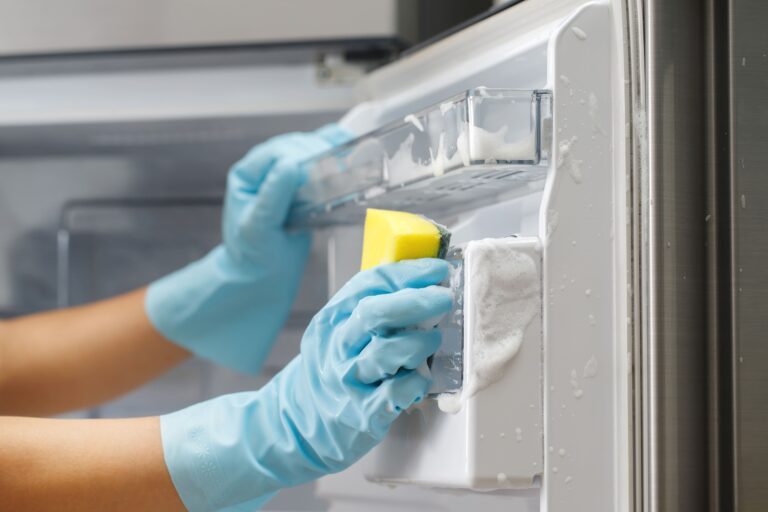
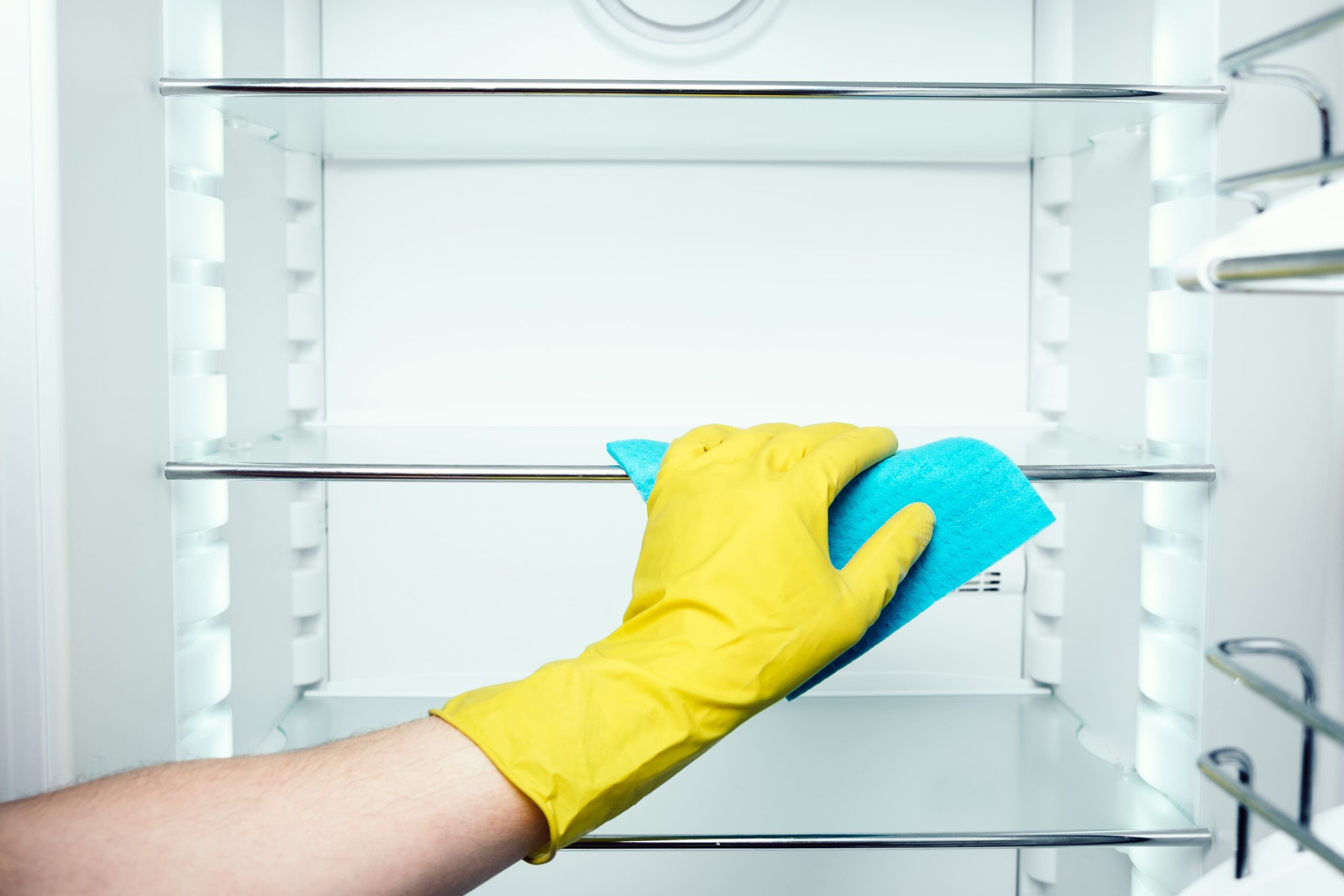
The interior is mostly plastic, glass, and rubber. For these surfaces, use the aforementioned food-safe sprays or vinegar solutions. To make the job easier, many modern American fridges have “spill-proof” glass shelves with hydrophobic edges. These should be cleaned with microfiber to maintain their coating. Avoid using abrasive scouring pads, which can create microscopic scratches where bacteria can hide.
Exterior doors and handles
- Stainless Steel: Most modern American kitchens feature stainless steel appliances. These require a specialized stainless steel cleaner or a few drops of olive oil on a cloth to maintain the grain and prevent fingerprints. Never use vinegar on stainless steel, as the acid can dull the finish over time.
- Touchscreens and Smart Panels: For “Smart” refrigerators, use only a dry or slightly damp electronic-safe microfiber cloth.
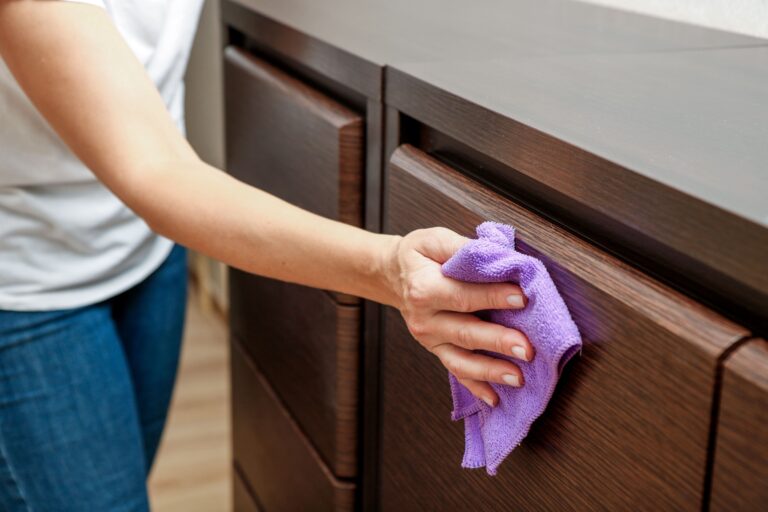
- Handles: Since handles are high-touch areas, these are the one place where a standard disinfecting wipe is appropriate to prevent the spread of household germs.
What to Avoid When Cleaning a Refrigerator
Bleach misuse
Bleach is a powerful tool, but it is frequently misused in the kitchen. Using “straight” or undiluted bleach can damage the rubber door seals (gaskets), causing them to become brittle and leak cold air. Furthermore, the fumes from concentrated bleach in a kitchen can be overwhelming and unsafe without professional-grade ventilation.
Strong fragrances
Avoid any cleaners with “Mountain Fresh,” “Floral,” or heavy citrus scents. Refrigerator interiors are small, sealed environments. A strong artificial scent will migrate into your food—nothing ruins a Sunday brunch faster than a bagel that tastes like floor cleaner.
FAQs
Can I use vinegar inside my fridge?
Yes, white distilled vinegar is one of the most effective and safest options for a refrigerator. Its acidity is perfect for cutting through the film that builds up on shelves. However, always dilute it with water to ensure it doesn’t irritate your skin or eyes in the confined space.
What do professionals use?
Professional cleaning services in the U.S. typically use a two-step process: a heavy-duty food-safe degreaser for the initial “bulk” clean, followed by a steam cleaner or a high-quality microfiber finish. Steam is a favorite among pros because it sanitizes and loosens debris using only heat and water, eliminating the need for chemicals entirely.
How do I sanitize without harsh chemicals?
The most effective way to sanitize naturally is using very hot water and steam. If you don’t have a steam cleaner, using a high-concentration vinegar solution left on the surface for 10 minutes before wiping can significantly reduce microbial loads without the risks associated with industrial disinfectants.
A clean refrigerator is more than just a chore—it is a commitment to your family’s health and the longevity of your home’s most important appliance. At Jama Cleaning, we understand the nuances of high-end appliance care. From restoring the luster of your stainless steel exterior to meticulously sanitizing every interior corner with food-safe protocols, our professional team delivers a level of clean that you can taste in the freshness of your food. Protect your investment and your health. Contact Jama Cleaning today for a professional kitchen refresh that sets the standard.